


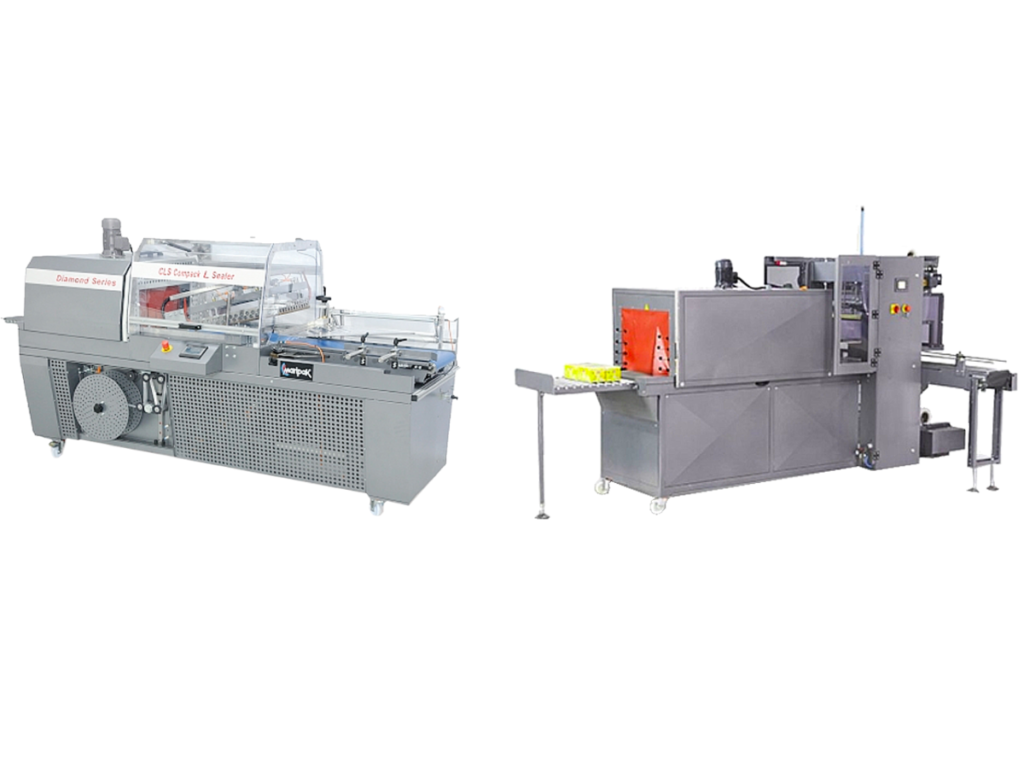
Packaging efficiency is at the heart of every successful production operation, and businesses today need solutions that balance performance with practicality. Not every facility requires a fully automated line, yet manual packaging simply cannot keep up with growing output demands. A semi-automatic L sealer machine bridges this gap effectively, offering reliable sealing performance with operator-assisted feeding that suits mid-range production volumes. From food products to consumer goods, this technology delivers repeatable results with minimal setup time, making it a smart investment for businesses looking to scale their packaging capabilities without overcommitting to full automation.
Understanding How an L Sealer Works
An L sealer gets its name from the L-shaped sealing bar configuration that simultaneously seals two sides of a product wrapped in shrink film. The operator places the product on the conveyor or sealing platform, the film is drawn around it, and the sealing bar descends to create a tight, clean seal. The sealed package then passes through a heat tunnel where the film shrinks conformally around the product. This process is straightforward, repeatable, and fast enough to handle continuous packaging runs without operator fatigue. The design keeps the workflow simple while delivering professional-grade results across a wide variety of product types and film materials.
Where the Semi-Automatic Model Fits Best
Not all production environments are the same, and that is precisely why the semi-automatic format holds such strong appeal across industries. Small to mid-sized manufacturers, contract packagers, and distribution centers often deal with varying product sizes and batch runs that do not justify the capital expenditure of a fully automated system. A semi-automatic L sealer machine fits naturally into these environments, providing enough throughput to meet daily targets while giving operators the flexibility to handle product changeovers quickly. Food processing units, pharmaceutical packagers, print shops, and retail product manufacturers all benefit from this format due to its adaptability and low maintenance requirements.
Speed, Consistency, and Reduced Material Waste
One of the most significant operational advantages of this equipment is the consistency it brings to every packaging cycle. Manual wrapping is prone to uneven film tension, inconsistent seal quality, and higher material waste due to human variability. In contrast, a semi-automatic L sealer machine uses a controlled sealing mechanism that applies uniform heat and pressure on every cycle, producing tight, clean seals regardless of the operator’s experience level. Film consumption is also optimized because the system draws only the required amount of film per product, reducing excess and lowering overall material costs across high-volume production runs over time.
Film Types and Product Compatibility
Modern L sealers are designed to work with a range of shrink film materials, most commonly polyolefin and PVC films. Polyolefin is widely preferred for food-contact applications due to its clarity, strength, and compliance with safety standards. PVC films offer excellent shrink characteristics and are commonly used for non-food products. The sealing bar temperature is adjustable to accommodate different film thicknesses and materials, ensuring a clean seal without burning or tearing.
Maintenance, Safety, and Long-Term Reliability
Durability and ease of maintenance are critical factors when evaluating any packaging equipment. L sealers built with high-quality components require minimal scheduled maintenance, and most wear parts, such as sealing wires and Teflon coatings, are easy to replace without specialized tools. Safety features, including insulated sealing bars, emergency stop functions, and protective guards, ensure operator safety during continuous use.
Conclusion
For businesses seeking reliable, consistent, and scalable packaging performance without the complexity of full automation, the semi-automatic L sealer format delivers exceptional value. It meets continuous packaging needs with precision and simplicity that operators and managers both appreciate. As product presentation and protective packaging continue to grow in importance, heat-shrink wrapping machines remain indispensable across industries that prioritize quality, efficiency, and professional output at every stage of the packaging process.
