


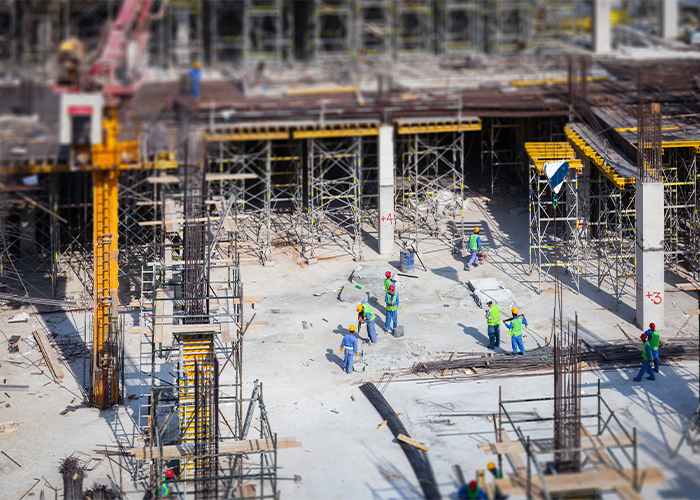
India’s construction industry consumes millions of tonnes of reinforcement steel annually, and the market for TMT bar companies in India has grown to match this demand with a wide range of producers spanning integrated steel plants, mini steel mills, and specialized rolling mills. For civil engineers, contractors, builders, and procurement professionals, navigating this diverse supplier landscape to identify the right TMT bar company in India for a specific project requires applying clear, objective evaluation criteria rather than relying on familiarity or price alone. This article provides the framework for that evaluation.
Understanding the Landscape of TMT Bar Companies in India
TMT bar companies in India operate across several tiers of production integration and technological sophistication. Integrated steel producers control the full production chain from raw material to finished bar, providing the highest level of quality consistency because every input variable is managed within the same organization. Electric arc furnace (EAF) producers use scrap steel as the primary input, which can achieve good quality results with rigorous incoming material testing but introduces more input variability than integrated producers. Rolling mills purchase billets from third parties and roll them into TMT bars, providing the least input control and the most dependence on the quality of purchased material.
For large infrastructure and commercial projects where structural engineering specifications are demanding and quality traceability is contractually required, TMT bar companies in India with integrated production chains generally provide the most reliable quality assurance. For smaller projects where budget considerations weigh heavily and lower grade specifications apply, a broader range of TMT bar company in India options may be practically viable.
Key Criteria for Evaluating a TMT Bar Company in India
Applying a structured set of criteria when evaluating any TMT bar company in India significantly reduces the risk of quality disappointment and project delay.
BIS Certification and Grade Compliance
The most fundamental criterion for any TMT bar companies in India evaluation is BIS (Bureau of Indian Standards) certification for the specific TMT bar grades offered. IS 1786 is the governing Indian standard for high-strength deformed steel bars and wires for concrete reinforcement, and compliance with this standard is mandatory under Indian law for structural use. A reputable TMT bar company in India will hold current BIS certification for every grade it produces and will provide ISI-marked products that carry the government-recognised quality verification mark on the bar rib pattern.
Production Technology and Chemical Composition Control
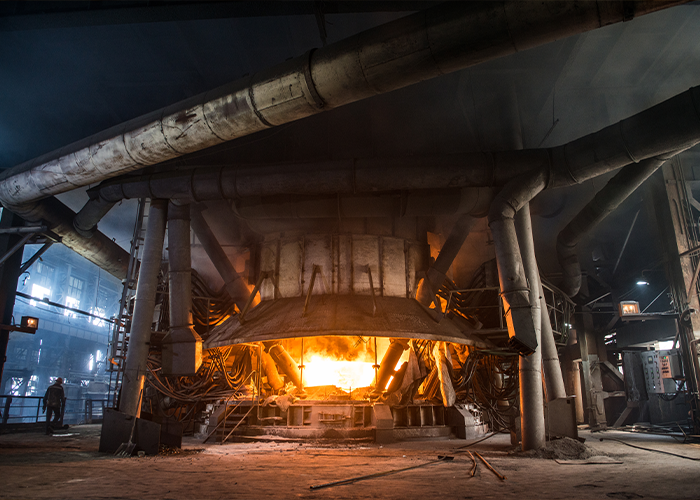
The production technology used by any TMT bar companies in India candidate determines its ability to control the chemical composition parameters that most affect TMT bar performance. Carbon equivalent, sulphur content, phosphorus content, and the manganese-to-silicon ratio all influence the bar’s weldability, ductility in seismic loading, and corrosion resistance over the structure’s service life. The Ladle Refining Furnace (LRF) process, used by leading producers including Sree Metaliks Limited, provides the most effective control over these parameters through secondary metallurgy refining before casting.
Third-Party Testing and NABL-Accredited Laboratory Results
Reputable TMT bar companies in India provide test certificates from NABL-accredited laboratories that independently verify the mechanical and chemical properties of each production batch. These test certificates should be routinely available from the manufacturer and should reference specific heat numbers that allow traceability back to the production batch. A TMT bar company in India that cannot or will not provide NABL test certificates with its material should be regarded with significant caution for any structurally demanding application.
Ductility Grade for Seismic Zones
Projects in earthquake-prone regions of India require TMT bars with high ductility specifications. The IS 1786 standard designates the D suffix for high-ductility grades, with Fe 500D and Fe 550D providing significantly better elongation and bend performance than non-D equivalents. TMT bar companies in India that produce D-grade variants and can demonstrate test certificate compliance with the IS 1786 ductility requirements provide the specification range needed for seismic zone construction. Structural engineers specifying reinforcement for buildings in seismic zones II through V should confirm that the chosen TMT bar company in India produces certified D-grade material before finalizing procurement.
Distribution and Supply Chain Reliability
Beyond product quality, the practical reliability of a TMT bar company in India as a supply chain partner matters significantly for construction projects with tight timelines. TMT bar companies in India with established warehouse networks across multiple states can commit to delivery timelines that geographically distant producers cannot. Evaluating a potential TMT bar supplier’s warehouse locations, typical lead times, minimum order quantities, and historical delivery performance provides important supply chain risk information alongside the technical product evaluation.
Price and Total Cost of Ownership
Price is an inevitable consideration in any TMT bar companies in India evaluation, but it should be assessed as total cost of ownership rather than unit price alone. A lower-priced TMT bar from a less rigorously controlled TMT bar company in India that requires additional third-party testing before acceptance, carries a higher rejection risk, or arrives with inadequate documentation may represent a higher total cost than a correctly priced product from a well-certified supplier whose quality assurance processes eliminate these downstream costs.
Conclusion
Selecting the right TMT bar company in India from the diverse landscape of TMT bar companies in India requires applying objective criteria across BIS certification, production technology, LRF-based composition control, NABL-accredited test certificates, ductility grade availability, and supply chain reliability. These criteria identify producers whose quality assurance is systematic and verifiable rather than asserted. For construction professionals who take structural safety seriously, this due diligence process is the most important investment they can make in the quality of the reinforcement steel that every concrete structure in India depends upon.
