


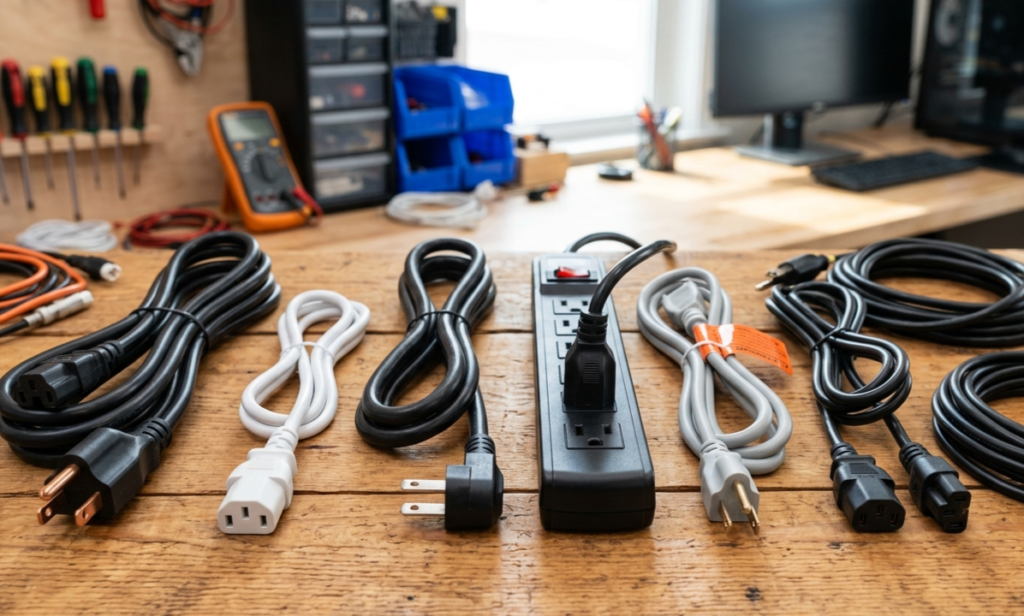
Power cords are essential components that keep electronic devices, appliances, and industrial equipment running safely and efficiently. From desktop computers and monitors to servers and household appliances, choosing the right power cord is important for performance, safety, and compatibility.
In this guide, we’ll explain the most common types of power cords, their uses, and key buying tips to help you choose the right cable for your needs.
What Is a Power Cord?
A power cord is an electrical cable used to connect a device to a power source. It transfers electricity from a wall outlet, power strip, or generator to electronic equipment.
Most power cords include:
- A plug connector
- Internal electrical wires
- Protective insulation
- A device-side connector
Power cords come in different lengths, connector types, voltage ratings, and regional standards.
Why Choosing the Right Power Cord Matters
Using the correct power cord is important because it ensures:
Safety
Poor-quality or incompatible cords may overheat or cause electrical hazards.
Reliable Performance
A properly rated cable delivers stable power to devices without interruptions.
Device Compatibility
Different electronics require specific connector types and voltage capacities.
Longer Equipment Life
High-quality cords help protect sensitive electronics from power issues.
Common Types of Power Cords
1. IEC320 Power Cords
IEC320 power cords are commonly used for computers, monitors, servers, and networking equipment.
Popular connector types include:
- C13 to C14
- C19 to C20
- C5 Cloverleaf connectors
Common Uses
- Desktop PCs
- UPS systems
- Data center equipment
- Monitors and printers
These cords are widely used because of their universal compatibility and reliable performance.
2. NEMA Power Cords
NEMA power cords follow North American electrical standards and are widely used in homes and offices.
Common NEMA Configurations
- NEMA 5-15P
- NEMA 5-20P
- NEMA L5-30P
Applications
- Home appliances
- Office equipment
- Commercial electronics
NEMA cords are durable and designed for safe use with standard U.S. power outlets.
3. International Power Cords
Different countries use different plug designs and voltage systems. International power cords are designed to match regional outlet standards.
Examples
- UK power cords
- European Schuko cords
- Australian power cables
Best For
- International travelers
- Imported electronics
- Global businesses
Always confirm voltage compatibility before using international power cords.
4. Extension Power Cords
Extension cords provide extra reach when standard cables are too short.
Types of Extension Cords
- Indoor extension cords
- Outdoor extension cords
- Heavy-duty industrial cords
Common Uses
- Home offices
- Construction sites
- Events and temporary setups
For safety, avoid overloading extension cords and always use outdoor-rated cords outdoors.
5. C14 to C19 Power Cords
C14 to C19 power cords are commonly used in servers, network switches, and data center equipment.
Benefits
- High power capacity
- Secure connections
- Ideal for enterprise environments
These cables are essential for professional IT and server rack installations.
Understanding Power Cord Ratings
Before buying a power cord, it’s important to understand its specifications.
Voltage Rating
The voltage rating shows the maximum voltage a cord can safely handle, such as:
- 125V
- 250V
Always match the cord’s rating to your device requirements.
Amperage Rating
Amperage indicates how much electrical current the cord can safely carry.
Common ratings include:
- 10A
- 15A
- 20A
Using a cord with insufficient amperage can cause overheating.
Wire Gauge (AWG)
Wire gauge affects power handling capacity.
Common sizes:
- 18 AWG
- 16 AWG
- 14 AWG
Lower AWG numbers indicate thicker wires capable of carrying more current.
How to Choose the Right Power Cord
1. Check Compatibility
Ensure both ends of the cord match:
- Your device connector
- Your wall outlet or power source
2. Verify Power Requirements
Review your equipment’s voltage and amperage needs before purchasing.
3. Choose the Correct Length
Avoid cords that are too short or excessively long. Longer cords may reduce efficiency in high-power applications.
4. Consider the Environment
Use:
- Indoor-rated cords for offices and homes
- Outdoor-rated cords for harsh weather conditions
- Heavy-duty cords for industrial applications
5. Look for Safety Certifications
Reliable power cords often include certifications such as:
- UL Listed
- ETL Certified
- RoHS Compliant
Certified cords meet recognized safety standards.
Common Power Cord Problems
Over time, power cords may develop issues such as:
- Frayed insulation
- Loose connectors
- Overheating
- Power interruptions
Damaged cords should be replaced immediately to prevent safety risks.
Power Cord Maintenance Tips
To extend the life of your cables:
- Store cords neatly
- Avoid sharp bends
- Keep cords dry
- Inspect cables regularly
Never pull cords by the wire or place heavy objects on them.
Final Thoughts
Power cords are more important than many people realize. Choosing the right cable improves safety, performance, and reliability for your electronics and equipment.
Whether you need IEC320 power cords, NEMA power cords, extension cords, or international power cables, understanding connector types, voltage ratings, and safety standards can help you make the best decision.
Before buying a power cord, always verify compatibility, power capacity, and certification to ensure safe and efficient operation for your devices.
