


Regupol underlay has earned a strong reputation for delivering reliable acoustic performance in a wide range of flooring applications. Engineered to reduce impact noise and improve comfort, it is commonly used in residential, commercial, and multi-story developments. Its durability, consistent results, and compliance with industry standards make it a preferred choice among professionals. Understanding its advantages highlights why it remains a leading solution in acoustic floor systems.
The Importance of Consistent Dynamic Stiffness
When acoustic engineers specify underlay for a floor system, the number they focus on more than any other is dynamic stiffness, measured in MN/m³. This value describes how easily the underlay compresses under vibration — lower values mean a more compliant material that absorbs impact energy more effectively before it reaches the structure. The problem with many generic underlay products is not that they perform badly on day one, but that their dynamic stiffness changes over time as the material compresses under sustained load.
This is the core challenge in specifying underlay for occupied buildings. A product that achieves excellent acoustic test results in a freshly built mock-up may perform significantly worse after two years of normal use if its resilience is not maintained. Understanding which materials hold their performance over the long term is essential for genuine compliance.
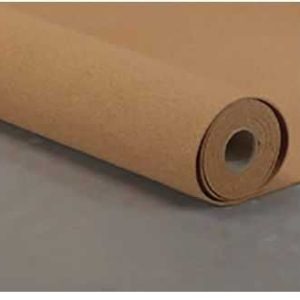
What Makes Recycled Rubber Underlays Different
High-quality acoustic underlay products based on recycled rubber granules — a category exemplified by Regupol — maintain their dynamic stiffness over time far more reliably than foam alternatives. Rubber is inherently elastic: it deforms under load and returns to its original form, cycle after cycle, over periods of decades rather than years. This property makes rubber-based underlays the preferred choice for commercial flooring applications, high-traffic residential corridors, and anywhere the longevity of acoustic performance is as important as its initial value.
The recycled content of rubber granule products also offers a sustainability credential that resonates with specifiers working to BREEAM or LEED standards. Products derived from end-of-life vehicle tyres divert a significant waste stream while delivering technical performance that competes with virgin-material alternatives.
Regupol Underlay in Performance Specification
Among the products that consistently appear in acoustic specifications requiring high-performance, long-life flooring systems, regupol underlay has established a strong track record across both commercial and residential applications. Available in multiple grades with varying density and thickness profiles, the product range can be matched to specific floor construction types from direct-bond hard flooring over concrete to floating systems above timber joists with corresponding performance data for each configuration.
For projects requiring post-installation acoustic testing, using a product with a well-documented system test history means fewer surprises. Certification data is available for common floor constructions, making it straightforward to demonstrate predicted compliance during the specification stage.
Practical Considerations
Regupol-type products come in sheet rolls and pre-cut tile formats. Sheet installation minimises joints and is preferred for large continuous areas; tiled formats offer easier handling in retrofit situations where access is restricted. Both should be installed with perimeter upstands and taped joints to prevent flanking paths.
Thickness selection should be based on the available void height below the finished floor level, the subfloor stiffness, and the acoustic target. For floating timber floors where significant joist deflection is possible, a thicker and more compliant grade is preferable to prevent the underlay from bottoming out under combined static and dynamic loads.
A Comparison of Common Underlay Types
| Material | Dynamic Stiffness | Longevity | Best For |
| PE Foam | High (poor) | Low | Budget residential carpet |
| PU Foam (HD) | Medium | Moderate | Standard residential floating floors |
| Cork/Corkment | Low-medium | High | Natural material preference |
| Recycled rubber (Regupol) | Low (excellent) | Very high | Commercial and high-demand residential |
Conclusion
Where acoustic performance needs to be demonstrable, compliant, and durable over the full service life of a floor, the quality of the underlay specification matters enormously. Insulation Point Limited carries a range of professional-grade acoustic underlay products including rubber granule systems, ensuring specifiers and contractors can find the right product for even the most demanding acoustic floor requirements.
