


Machines are the silent workers behind almost every product we use today. From food packaging to car parts, many industries depend on smooth and steady machine movement. But what if one small part could decide whether a machine runs perfectly or stops suddenly?
That small but powerful part is the timing belt.
In recent years, advanced timing belts have changed how industries work. They are helping factories save time, reduce waste, and increase production. Let’s explore how these simple-looking belts are quietly transforming industrial efficiency.
What Makes Modern Timing Belts Different?
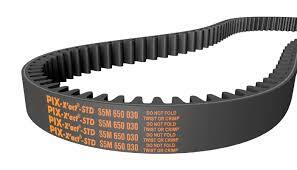
At first glance, a timing belt may look like a simple rubber belt with teeth. But modern designs are far more advanced than older versions.
Today’s timing belts are made with stronger materials and improved structures. They are designed to handle heavy loads, high speeds, and long working hours without losing performance.
Here is what sets them apart:
- Stronger inner cords for better strength
- Improved tooth design for smooth grip
- Better resistance to heat and wear
- Longer service life compared to older belts
These improvements may sound small, but together they create a big impact in factories that run machines 24/7.
If you want to learn more about high-performance Timing Belts and how they support industrial efficiency, explore solutions from Pix transmission. Their experience in motion systems helps industries stay productive and reliable. Contact them to discover the right solution for your application.
The Hidden Cost of Poor Machine Synchronization
Before we understand the benefits, let’s think about a common industrial problem.
When machine parts do not move in perfect timing:
- Production slows down
- Products may be damaged
- Machines may break
- Repair costs increase
Even a few seconds of delay in synchronization can affect thousands of products in a day.
Advanced timing belts solve this problem by ensuring that rotating parts move in exact coordination. This precise movement improves overall efficiency in ways that many people do not immediately notice.
How Advanced Timing Belts Improve Industrial Efficiency
1. Better Power Transmission
Modern timing belts transfer power smoothly from one shaft to another. There is no slipping. This means:
- Accurate motion control
- Stable machine speed
- Consistent product quality
When power moves smoothly, machines perform better and waste less energy.
2. Reduced Downtime
Machine downtime is one of the biggest challenges in any industry. Every minute a machine stops, money is lost.
Advanced timing belts are built to last longer. They resist cracking, stretching, and wear. Because of this:
- Maintenance becomes less frequent
- Sudden breakdowns are reduced
- Production continues without interruption
The result? Higher productivity and fewer unexpected delays.
3. Lower Maintenance Requirements
Older systems often required regular tightening and adjustments. Modern timing belts are designed to maintain tension for longer periods.
This leads to:
- Less manual adjustment
- Lower maintenance costs
- Reduced labor time
Maintenance teams can focus on more important tasks instead of constant belt corrections.
A Simple Comparison: Traditional vs Advanced Timing Belts
| Feature | Traditional Belts | Advanced Timing Belts |
|---|---|---|
| Durability | Moderate | High |
| Resistance to Heat | Limited | Strong |
| Power Accuracy | May slip | No slip |
| Maintenance Needs | Frequent | Low |
| Lifespan | Shorter | Longer |
This comparison clearly shows why industries are moving toward modern solutions.
Industries That Are Seeing Major Benefits
The impact of advanced timing belts can be seen across many sectors.
Automotive Manufacturing
Precision is critical in automotive production. Even small timing errors can affect engine parts and safety systems. Modern belts ensure accurate motion in assembly lines.
Food Processing
In food production, machines must run continuously. Clean and reliable motion helps maintain hygiene and consistent packaging speed.
Textile Industry
Textile machines operate at high speeds. Advanced belts help maintain smooth movement without vibration or noise.
Packaging Industry
High-speed packaging requires perfect timing. These belts support fast and accurate operations without product damage.
The Role of Material Innovation
One of the biggest reasons for this transformation is material development.
Modern timing belts often include:
- High-strength synthetic rubber
- Reinforced fiber cords
- Wear-resistant tooth surfaces
These materials allow belts to handle heavy loads and high temperatures while maintaining flexibility.
How Efficiency Directly Impacts Profit
Efficiency is not just about speed. It also affects cost.
When machines operate smoothly:
- Energy use decreases
- Product defects reduce
- Waste becomes minimal
- Repair costs go down
Let’s look at this impact clearly.
| Efficiency Factor | Before Advanced Belts | After Advanced Belts |
|---|---|---|
| Machine Downtime | High | Low |
| Energy Consumption | Higher | Reduced |
| Product Defects | More frequent | Minimal |
| Maintenance Costs | Repeated | Controlled |
| Overall Productivity | Moderate | Significantly Improved |
These improvements may seem gradual, but over months and years, they create major financial savings.
A Quiet Revolution in Motion
The most interesting part? Most people never notice this change.
Timing belts work silently inside machines. They do not attract attention. Yet they play a key role in keeping entire industries running.
As factories aim for automation and smarter production systems, reliable motion control becomes even more important. Advanced timing belts support this shift by delivering consistent and dependable performance.
And here’s the question that sparks curiosity: If such a small component can improve efficiency so much, what other hidden parts inside machines are driving industrial progress?
The Future of Industrial Motion
The future looks promising. As materials continue to improve and manufacturing becomes more precise, timing belts will become even more durable and efficient.
We may soon see belts that:
- Last significantly longer
- Work under extreme temperatures
- Support even higher speeds
- Reduce energy use further
Industries are constantly searching for smarter ways to improve output. Advanced timing belts are already proving that small innovations can create powerful results.
Common FAQ’S
1. What is Pix Transmission?
Pix Transmission is a company that manufactures and supplies mechanical power transmission products such as belts used in industrial and automotive applications.
2. What is a timing belt?
A timing belt is a toothed belt that connects machine shafts and ensures they move in perfect coordination without slipping.
3. Where are timing belts commonly used?
Timing belts are widely used in industrial machines, automotive engines, packaging equipment, textile machines, and food processing systems.
4. Why are timing belts important in machinery?
Timing belts help maintain accurate movement between rotating parts. This improves machine performance, reduces breakdowns, and supports smooth production.
5. What products does Pix Transmission offer besides timing belts?
Pix Transmission offers a wide range of power transmission products including V-belts, ribbed belts, agricultural belts, and industrial belt solutions.
