


In today’s hotel industry, speed is not just a service feature—it is a deciding factor. Guests no longer wait hours for answers. They compare options, send inquiries, and expect replies almost instantly.
But what really happens when a hotel responds slowly?
The impact goes far beyond a missed message. A delay of even a few minutes can quietly turn into lost revenue, damaged trust, and fewer direct bookings. Let’s explore how slow response time affects hotel bookings—and why it matters more than many hotel leaders realize.
Why Speed Matters More Than Ever
Travelers now plan trips online, often using mobile phones. When they ask about room availability, pricing, or check-in details, they are usually comparing multiple hotels at the same time.
If one hotel answers immediately and another replies hours later, the decision is often already made.
Guests expect:
- Quick answers to basic questions
- Clear information about rooms and services
- Simple booking guidance
- Support at any hour of the day
When these expectations are not met, frustration grows quickly.
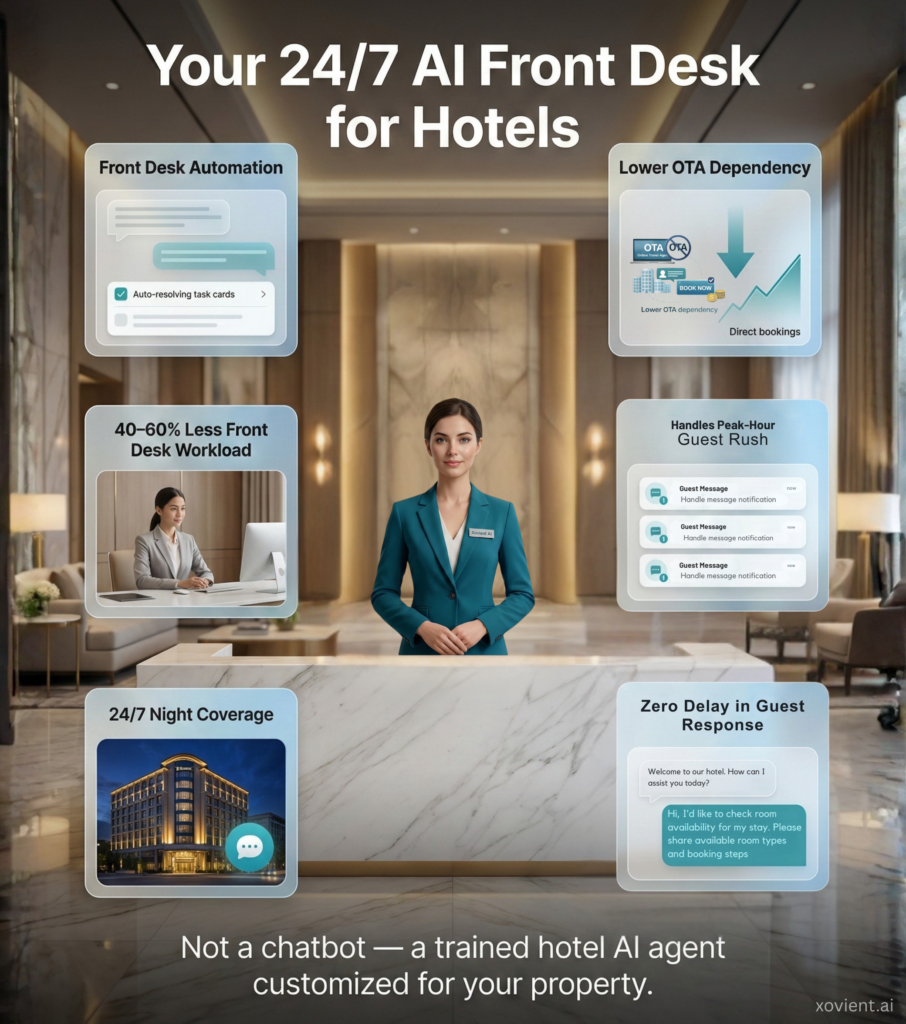
Note: If your hotel wants to reduce delays and provide instant guest support, consider solutions like the best AI chatbot for hotels. Platforms such as Xovient ai offer tools designed to centralize communication and automate guest interactions. To explore how it can support your hotel operations, Contact them and learn more.
The Hidden Psychology of Waiting
Waiting creates doubt.
When a guest does not receive a timely reply, they may start to wonder:
- Is the hotel fully booked?
- Is customer service slow?
- Will check-in also be delayed?
- Will I face problems during my stay?
Even if the hotel provides excellent service on property, a slow first response can create a negative first impression.
In hospitality, the first interaction often shapes the entire experience.
How Slow Response Time Directly Impacts Bookings
Let’s look at what happens step by step when a hotel responds late.
| Guest Action | Hotel Response | Likely Outcome |
|---|---|---|
| Guest asks about room availability | Reply after several hours | Guest books another hotel |
| Guest requests pricing details | Delayed response | Guest compares and chooses faster option |
| Guest asks late-night question | No immediate support | Guest loses confidence |
| Guest inquires in another language | No timely answer | Guest feels unsupported |
Each delay may seem small. But together, they create a pattern that reduces conversion rates.
Lost Direct Bookings and Revenue
When guests do not receive quick answers, they often turn to third-party platforms. These platforms provide instant confirmations and clear details.
This shift can lead to:
- Lower direct bookings
- Higher commission costs
- Reduced profit margins
- Less control over guest relationships
Fast communication helps hotels guide inquiries directly toward reservations. Slow communication pushes potential guests away.
Operational Pressure on Hotel Teams
Slow response time is not always intentional. Often, it happens because staff members are busy with front-desk tasks, check-ins, phone calls, and guest requests.
Manual communication can lead to:
- Missed messages
- Repeated answers to common questions
- Delayed follow-ups
- Inconsistent replies
Over time, this creates stress for staff and confusion for guests.
The Power of Instant Communication
Hotels that provide immediate responses create a smoother guest journey. When questions are answered instantly, guests feel heard and valued.
Here is how fast response improves outcomes:
| Communication Speed | Guest Reaction | Business Result |
|---|---|---|
| Instant reply | Feels supported | Higher booking chance |
| 24/7 availability | Builds trust | More late-night inquiries converted |
| Multilingual support | Feels understood | Attracts international travelers |
| Guided booking assistance | Easy decision-making | Increased direct reservations |
Immediate communication removes uncertainty. And when uncertainty is removed, bookings increase.
24/7 Availability: The New Standard
Travel decisions do not happen only during office hours. Guests search for rooms late at night, early in the morning, and during travel planning breaks.
If a hotel cannot respond outside working hours, it risks losing:
- International guests in different time zones
- Last-minute bookings
- Urgent reservation changes
- Pre-arrival questions
Round-the-clock support ensures that no opportunity is missed simply because the clock says it is after hours.
Personalization and Speed Together
Speed alone is not enough. Guests also expect personalized responses.
When communication systems can remember guest preferences, past interactions, or special requests, replies become more meaningful.
Personalized and fast responses can:
- Suggest relevant services
- Recommend dining or spa options
- Guide guests based on past behavior
- Offer helpful local information
This combination increases satisfaction even before check-in.
Centralized Communication Reduces Delays
Many hotels receive messages from multiple platforms:
- Website chat
- Social media channels
- Messaging apps
- Direct inquiries
Without a unified system, messages can easily be missed.
Centralized chat management allows hotel teams to:
- View all conversations in one place
- Track inquiries
- Maintain consistent service
- Follow up efficiently
When communication is organized, response time improves naturally.
Multilingual Support Expands Opportunities
Hotels serve guests from around the world. Language barriers can slow down conversations and cause misunderstandings.
When guests can communicate in their preferred language, they feel more comfortable and confident.
This leads to:
- Higher satisfaction
- Faster decisions
- Fewer booking errors
- Stronger guest loyalty
Voice and Messaging Flexibility
Modern travelers use both typing and voice messages. Offering voice-enabled support allows guests to ask questions quickly without typing long messages.
This small convenience can make communication feel natural and easy, especially for guests on the move.
Why Hotel Leaders Must Act Now
The hotel industry is becoming more competitive every year. Technology is shaping how guests search, compare, and book.
If response time remains slow:
- Revenue opportunities shrink
- Guest trust weakens
- Staff workload increases
- Competitors gain advantage
But when communication becomes instant, consistent, and personalized, the results can transform booking performance.
The difference between a confirmed reservation and a lost opportunity often comes down to one simple factor: speed.
The Future of Hotel Communication
Artificial intelligence is helping hotels provide instant, accurate, and consistent responses. These systems centralize communication, automate routine questions, and guide guests toward bookings.
They also:
- Operate 24/7
- Support multiple languages
- Assist with reservations
- Manage conversations across channels
- Provide voice message support
This approach allows hotel teams to focus on complex guest needs while routine inquiries are handled smoothly.
In the future, fast and intelligent communication will not be optional. It will be expected.
Conclusion: Time Is Revenue
Every delayed reply carries a hidden cost.
Slow response time does not just affect communication—it directly affects bookings, revenue, and reputation.
Hotels that prioritize speed create smoother guest journeys, build trust faster, and capture more direct reservations.
In hospitality, time truly is revenue.
