



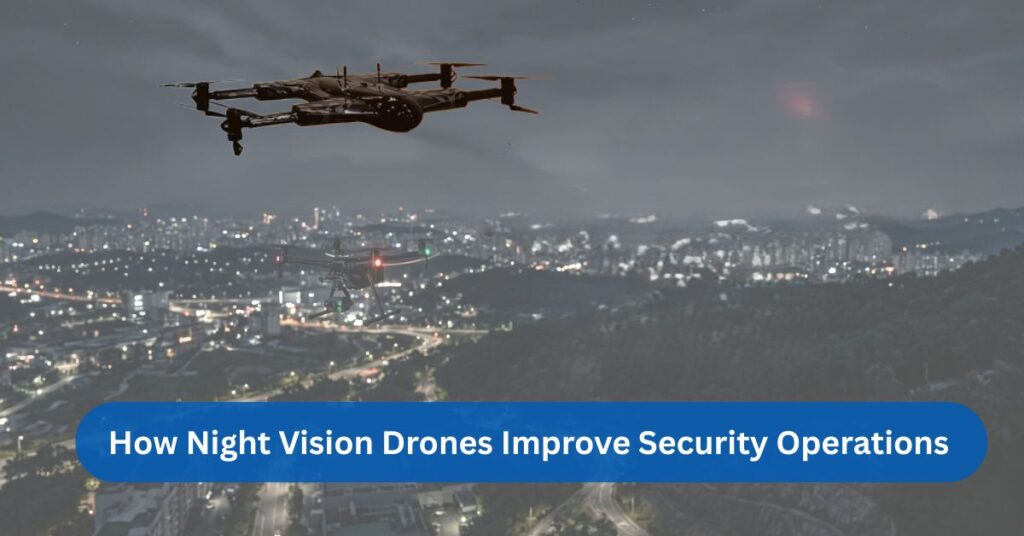
Night vision drones are transforming how aerial surveillance and monitoring are conducted after sunset. Traditional drones rely on daylight cameras, which limits their usefulness in low-light conditions. However, drones equipped with night vision technology allow operators to see clearly in darkness, making them highly valuable for security, military operations, wildlife monitoring, search and rescue missions, and industrial inspections. By combining advanced sensors, infrared cameras, and artificial intelligence, night vision drones provide clear aerial visibility even in the darkest environments. As industries increasingly require 24-hour monitoring capabilities, night vision drones are becoming an essential tool for modern aerial operations.
What is a Night Vision Drone?
A night vision drone is an unmanned aerial vehicle (UAV) equipped with specialized cameras or sensors that enable it to capture images and videos in low-light or no-light environments. Unlike standard drones, which depend on visible light, night vision drones use technologies such as infrared imaging, thermal cameras, and low-light sensors to detect objects and movement in darkness. These drones can identify heat signatures, detect human activity, and monitor large areas during nighttime operations. Because of their enhanced visibility capabilities, they are widely used by law enforcement, border patrol units, emergency response teams, and industrial security personnel.
Key Technologies Used in Night Vision Drones
Night vision drones rely on several advanced technologies that allow them to operate effectively in darkness. One of the most common technologies is thermal imaging, which detects heat emitted by people, animals, or machinery and converts it into a visible image. Another important technology is infrared (IR) night vision, which uses infrared light to illuminate objects that are invisible to the human eye. Additionally, many drones incorporate low-light sensors and AI-powered cameras that enhance image clarity in dim environments. These technologies allow operators to identify objects, track movement, and conduct surveillance with remarkable accuracy during nighttime missions.
Benefits of Using Night Vision Drones
Night vision drones provide several advantages compared to traditional surveillance systems. One of the primary benefits is 24/7 monitoring capability, allowing organizations to maintain constant situational awareness regardless of lighting conditions. They also improve safety and efficiency in operations such as search and rescue, where locating individuals in darkness can be life-saving. Additionally, night vision drones reduce the need for manual patrols in dangerous or remote areas, minimizing risks for personnel. Their ability to capture high-resolution images and real-time data also helps decision-makers respond quickly during emergencies or security incidents.
Applications of Night Vision Drone Technology
Night vision drones are used across many industries due to their versatility and advanced imaging capabilities. In law enforcement and security, they assist with nighttime surveillance, crowd monitoring, and crime prevention. In search and rescue operations, drones equipped with thermal cameras help locate missing persons in forests, mountains, or disaster zones. The military and border security sectors use night vision drones for reconnaissance, monitoring restricted areas, and identifying potential threats. Additionally, industries such as wildlife conservation, agriculture, and infrastructure inspection use these drones to monitor animals, crops, and critical assets after dark.
Features to Look for in a Night Vision Drone
When choosing a night vision drone, several features should be considered to ensure optimal performance. A high-quality thermal or infrared camera is essential for capturing clear images in darkness. Long flight time and battery life allow the drone to cover large areas without frequent recharging. Advanced stabilization and GPS navigation systems help maintain accurate flight control during nighttime missions. Many modern night vision drones also include AI-powered object detection, obstacle avoidance, and real-time data transmission, which improve operational efficiency and safety. These features collectively ensure reliable performance during critical nighttime operations.
Future Trends in Night Vision Drone Technology
The future of night vision drones is closely tied to advancements in artificial intelligence, sensor technology, and automation. Emerging drones are expected to include AI-powered analytics, allowing them to automatically detect suspicious activity or identify objects in real time. Improved thermal imaging resolution and longer battery life will further enhance their operational capabilities. Integration with 5G networks and cloud platforms will enable faster data transmission and remote control from long distances. As technology evolves, night vision drones will become even more efficient tools for surveillance, disaster response, and industrial monitoring.
How Night Vision Drones Improve Security Operations
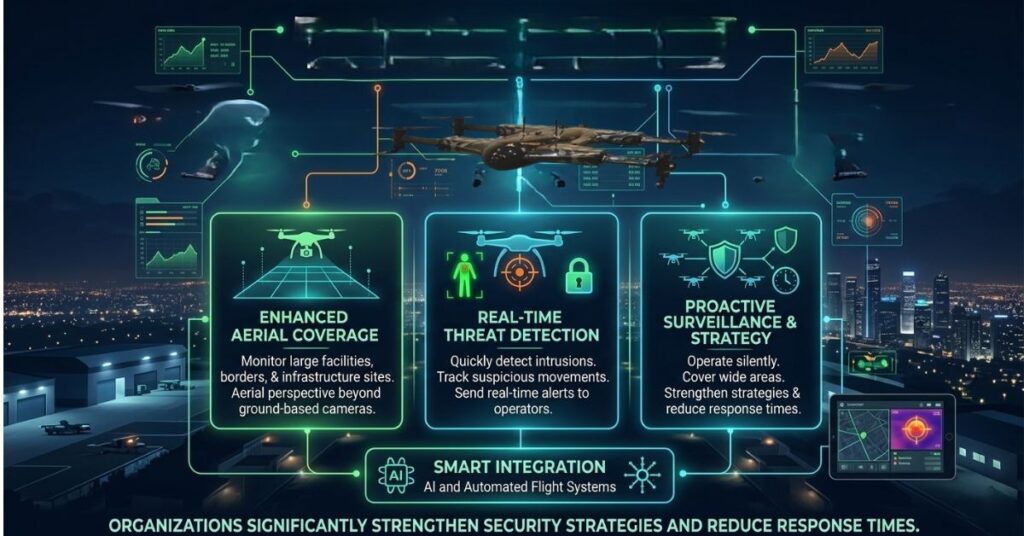
Night vision drones play a critical role in enhancing modern security operations. They provide aerial coverage that ground-based cameras cannot achieve, allowing security teams to monitor large facilities, borders, and infrastructure sites. These drones can quickly detect intrusions, track suspicious movements, and send real-time alerts to operators. Their ability to operate silently and cover wide areas also makes them ideal for proactive surveillance. By combining night vision capabilities with artificial intelligence and automated flight systems, organizations can significantly strengthen their security strategies and reduce response times to potential threats.
Zenadrone and Advanced Night Vision Drone Solutions
Companies around the world are developing advanced drones equipped with night vision technology, and ZenaDrone is one of the brands contributing to this growing field. ZenaDrone focuses on building intelligent drone solutions designed for surveillance, security, and industrial applications. By integrating high-performance sensors, AI-driven analytics, and advanced night vision capabilities, ZenaDrone aims to provide reliable aerial monitoring even in low-light conditions. These drones are designed to assist organizations in improving operational efficiency, enhancing safety, and maintaining continuous situational awareness. As the demand for night vision drone technology continues to grow, innovative brands like ZenaDrone are helping shape the future of smart aerial monitoring systems.