


Ever watched a business bleed money without knowing why? No theft, no bad sales month, just inventory numbers that never quite match the shelves. That is the quiet damage bad inventory tracking does, and it happens to businesses every single day.
The good news is, accounting software has come a long way. QuickBooks, Xero, Zoho Books, these are not just invoicing tools anymore. They are full inventory systems, and when you use them right, the errors stop.
The Real Problem With Manual Tracking
Most small businesses start with spreadsheets. It works, until it really does not. A single wrong number in a cell throws off your entire stock count. Someone forgets to update a row after a sale. Two people edit the same file at the same time. Spreadsheets rely entirely on manual data entry, and that is a recipe for human error (Ply). One typo and you are ordering stock you already have, or worse, running out of something you thought you had plenty of.
The problem compounds fast. Wrong stock levels mean wrong financial reports. Wrong financial reports mean bad business decisions. You are not just losing track of a few units, you are making purchasing and cash flow calls based on numbers that are simply not real.
What Accounting Software Actually Does
When your inventory and accounting live in the same system, things change. Every time you add an item to a purchase order or invoice, the software automatically updates your stock levels(Xero). No manual entry, no one forgetting to log the sale, no lag between what happened and what the system knows.
Xero does this. QuickBooks does this. So does Zoho Books. The stock count moves in real time because the system is watching every transaction as it happens. Every sale, expense, or payment is recorded, and if a product sells, the stock count decreases. As new stock arrives, the count increases (Stripe). It is happening in the background while you are doing everything else.
This matters more than people realize. When your inventory and accounting systems do not communicate, you are left guessing about your true costs and profitability (Ply). And guessing is expensive.
Choosing The Right Valuation Method
Here is something a lot of business owners skip over and then regret. How you value your inventory affects both your financial statements and your taxes. There are three main methods and they work very differently.
FIFO, First In First Out, means the oldest stock gets sold first. This usually lines up with how goods actually move and is the most common method. LIFO, Last In First Out, sells the newest stock first. During inflation, LIFO can lower your taxable income, which has obvious appeal (Breckenbusinesssolutions). Weighted Average smooths out price changes across your whole stock, which is useful when costs fluctuate a lot.
Your accounting software lets you set this once and then handles the calculations automatically. Make sure that you pick the right method for your business type before you start, because switching later is a headache.
The Integration Question
QuickBooks and Xero are great for small to medium businesses. But if your inventory is complex, multiple warehouses, lot tracking, serial numbers, expiry dates, a dedicated inventory tool plugged into your accounting software is worth looking at.
Fishbowl is a good example. It acts as the source of truth for all inventory data and exports that data to your accounting software on a scheduled basis, potentially many times per day, keeping the two systems in sync (Fishbowl Inventory). You get deep inventory features without losing the accounting setup you already know.
Cin7 is another option, especially for businesses selling across multiple channels. Its automated order processes reduce manual work and improve accuracy, with detailed analytics giving you real insight into sales performance (The CFO Club). It connects with Shopify, Amazon, QuickBooks, Xero, and more.
The fact is, the right setup depends on your size and complexity. A retail shop with 200 SKUs has different needs from a wholesale distributor with 4,000.
Cycle Counts Beat Annual Stocktakes
One big shift that accounting software makes possible is moving from yearly stock counts to regular cycle counts. Instead of shutting everything down once a year to count every item, you count portions of your inventory on a rolling schedule.
This catches errors while they are small. If your physical count does not match your records, investigate right away, as discrepancies may indicate theft, damage, or data entry errors (Breckenbusinesssolutions). Finding a ten unit discrepancy in week three is a very different problem from finding a five hundred unit discrepancy in December.
Most good accounting software logs every transaction, so tracing where a number went wrong takes minutes, not days.
Real Time Data Means Real Decisions
Here is what changes when your inventory tracking actually works. You know what is selling and what is sitting. You know when to reorder before you run out. You know your true cost of goods, which means you know your real margins.
Automatically restocking your best-selling item can mean hundreds or thousands of dollars in preserved revenue(Stripe). And on the other side, not over-ordering slow-moving stock frees up cash you can actually use.
Businesses that run on accurate inventory data make better buying decisions, price better, and waste less. That is not a small thing.
Finally, Make Sure Your Team Is Actually Using It
Software is only as good as the people running it. You can have the best system in the world and still end up with bad data if staff are skipping steps, doing manual overrides, or logging things inconsistently.
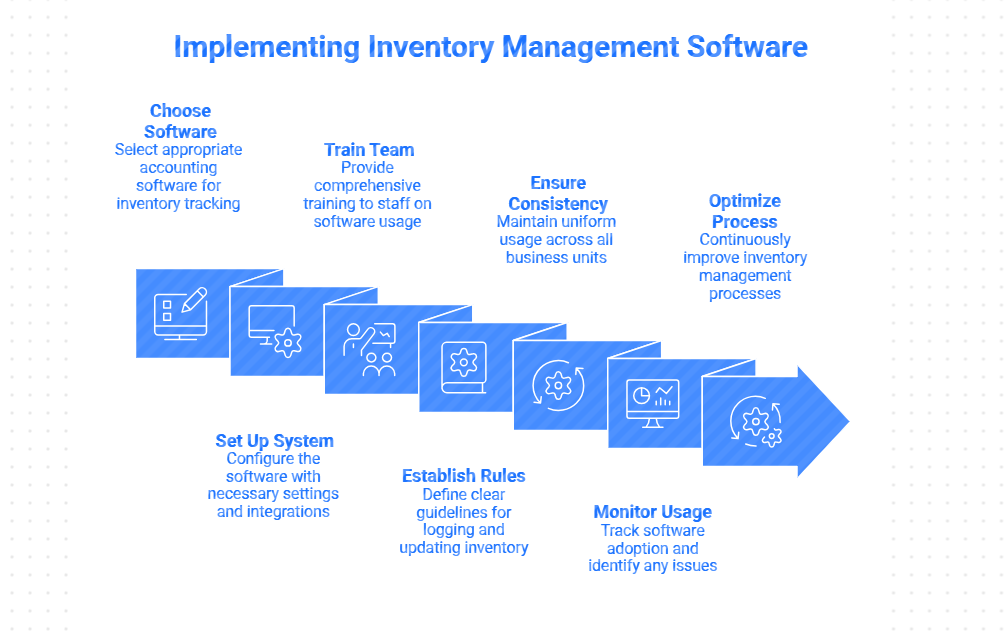
Train your team properly when you roll out a new system. Set clear rules for how stock gets logged, who updates what, and when. Use the same system across your entire business so all team members follow the same process and data stays reliable(Breckenbusinesssolutions).
All in all, inventory errors are not a technology problem, they are a process problem that technology can fix, but only if everyone is using it the same way. Get the software, set it up right, train your people, and then let it run. Your stock counts, your financials, and your stress levels will all thank you for it.
