


Modular AI is a strategic shift from monolithic, “all-in-one” platform replacements to surgical, component-based upgrades. By deploying Agentic AI systems as “System Enhancers,” enterprises can address specific workflow bottlenecks: such as lead ingestion or data extraction: without modifying their core legacy code. This approach reduces infrastructure costs by up to 60%, accelerates deployment to a 4-8 week window, and delivers measurable ROI by capturing leaked revenue immediately.
The Death of the “Rip and Replace” Era
For years, the standard advice for COOs and Tech Leads was “Digital Transformation.” This usually meant a three-year roadmap, tens of millions in consulting fees, and the terrifying prospect of ripping out core legacy systems.
It failed.
Integration anxiety is real. When your entire operation runs on a legacy CRM or a proprietary database, the risk of a “total overhaul” outweighs the theoretical benefits of a modern stack. This is where most AI initiatives die: buried under the weight of “technical debt” and the fear of breaking mission-critical systems.
At Agix Technologies, we don’t believe in the sledgehammer. We believe in the scalpel.
The Modular AI Strategy treats your existing infrastructure as a foundation, not an obstacle. We deploy intelligent AI automation to “patch the leak”: fixing the specific points where data, time, and money are escaping your business.
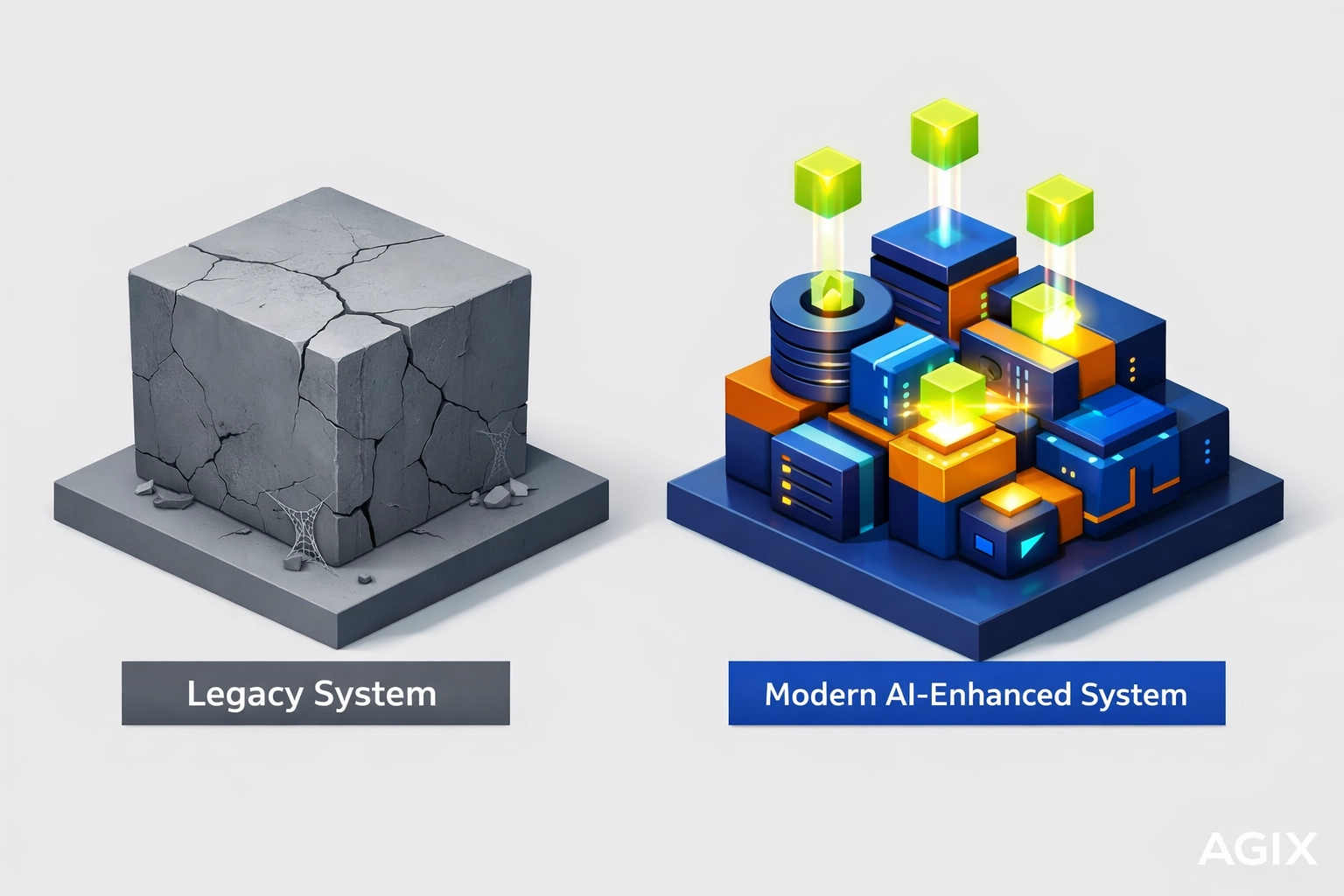
System Enhancers vs. Total Overhauls
A “System Enhancer” is a modular AI agent designed to sit on top of your existing workflows. It talks to your legacy software via APIs or even UI-level automation, performs a high-value task, and pushes the result back into your system of record.
| Feature | Legacy “Rip and Replace” | Agix Modular “System Enhancer” |
|---|---|---|
| Time to Value | 12 – 24 Months | 4 – 8 Weeks |
| Implementation Risk | High (System Downtime) | Low (Non-Invasive) |
| Initial Investment | $1M+ | Scalable / Project-Based |
| Infrastructure | Total Migration | Existing Stack + Modular Layer |
| ROI Measurement | Delayed / Theoretical | Immediate / Transactional |
By utilizing context-aware AI agents, companies can solve specific friction points without the “Big Bang” migration risk.
Real Estate: Escaping “Property Portal Purgatory”
In the Real Estate sector, legacy CRMs like Yardi or AppFolio are the backbone of the business. But they have a massive leak: Lead Ingestion.
Every day, hundreds of inquiries pour in from Zillow, Apartments.com, and direct websites. They land in a “Property Portal Purgatory”: a messy inbox where manual triage takes hours or days. By the time a human leasing agent responds, the lead has already moved on to a competitor.
The Patch:
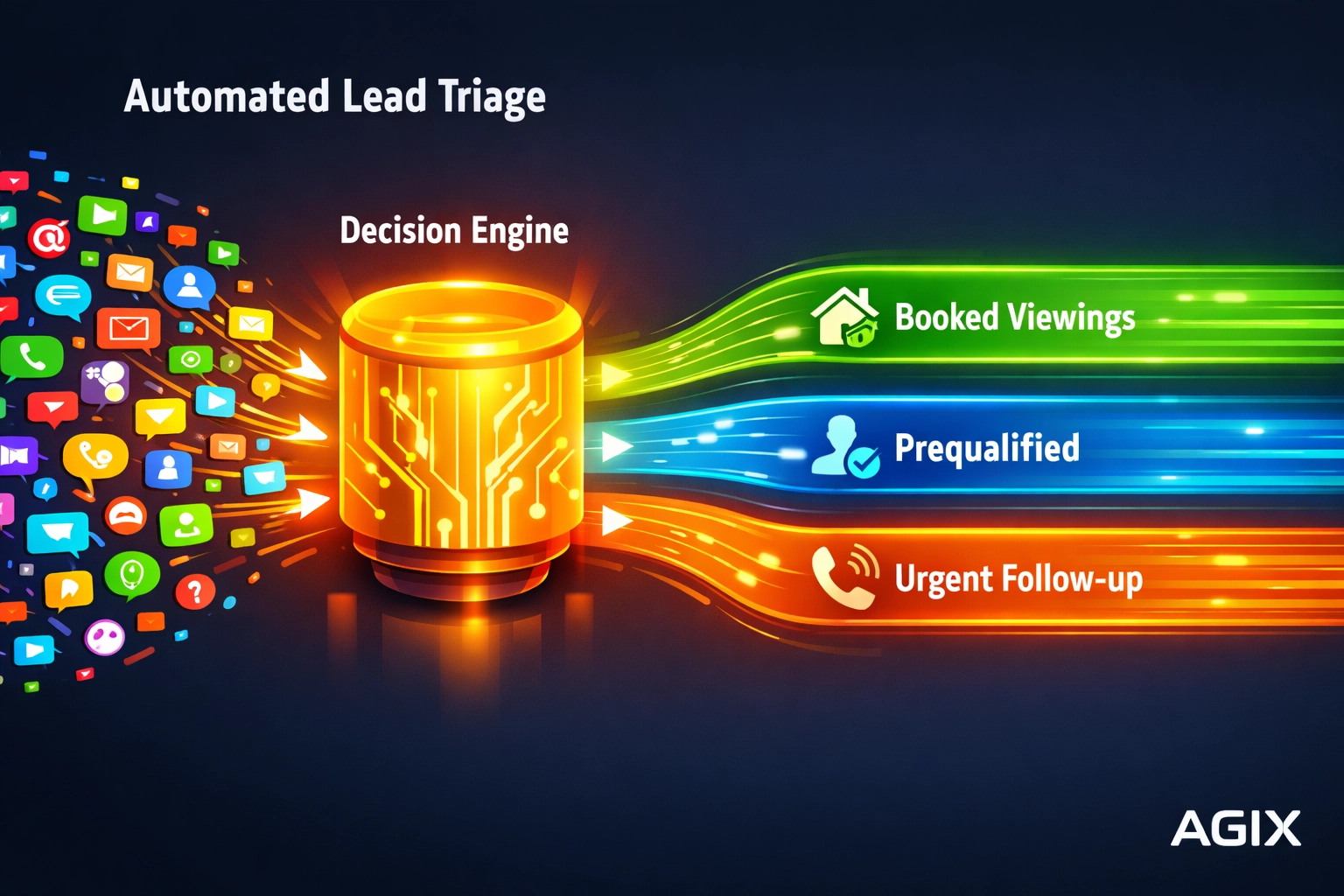
Instead of replacing Yardi, we deploy a modular agent using Decision AI.
- The Trigger: An inquiry hits the portal.
- The Agent: An AI agent parses the messy data, checks availability in the legacy CRM, and answers the prospect’s questions via conversational AI chatbots.
- The Result: A pre-qualified viewing is scheduled directly into the agent’s calendar.
The Impact: 0% change to the legacy database structure. 100% capture of previously leaked leads.
Healthcare & Fintech: Eliminating Friction
The leak in Healthcare and Fintech is almost always Intake Friction.
- Healthcare: Patient intake forms are still manually transcribed, or worse, trapped in fragmented PDFs. This “friction” leads to appointment cancellations and billing errors. A modular RAG (Retrieval-Augmented Generation) system can ingest these documents, cross-reference them against insurance databases, and populate the EHR (Electronic Health Record) automatically.
- Fintech: Underwriting bottlenecks are the silent killers of margin. When a loan application requires manual verification of bank statements or tax returns, the cost-per-acquisition skyrockets. Modular AI “Extractors” can process these documents in milliseconds, providing a risk score to the human underwriter instantly.
The Tech Stack: n8n, Retell, and Agentic Intelligence
We don’t build “black boxes.” Our strategy relies on production-ready tools and engineering discipline.
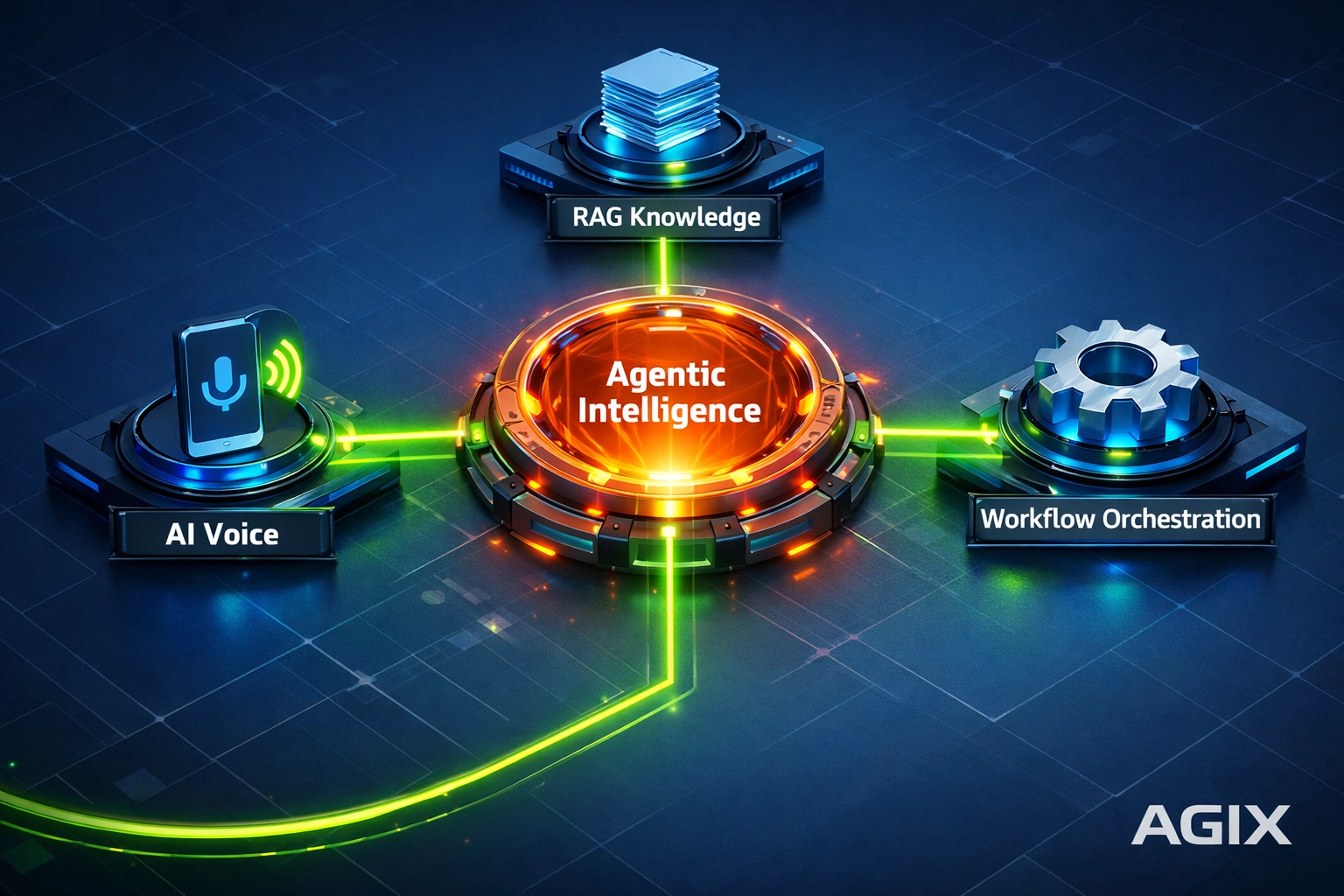
- n8n / Workflow Orchestration: We use advanced orchestration to connect legacy APIs with modern LLMs. This allows for complex logic paths that are transparent and auditable.
- Retell / AI Voice: For outbound and inbound call handling, we integrate AI voice agents that sound human and act with precision, handling the “front line” of customer service while your team focuses on high-value closing.
- Custom RAG Pipelines: We ground our AI in your data. By using Knowledge Intelligence, the modular agents only speak from your approved SOPs and databases.
Why Modular AI Scales Better
Traditional LLMs suffer from “Compute Cost Leakage.” Using a massive model like GPT-4 for a simple data extraction task is like using a private jet to go to the grocery store.
Our strategy involves Model Specialization. We use custom AI product development to deploy Smaller Language Models (SLMs) for specific tasks. These are faster, cheaper, and more secure. They live in 90% smaller containers and offer sub-second response times.
The 4-8 Week Delivery Promise
We move at the speed of your business, not the speed of a consulting firm’s billable hours. Our framework is designed for rapid deployment:
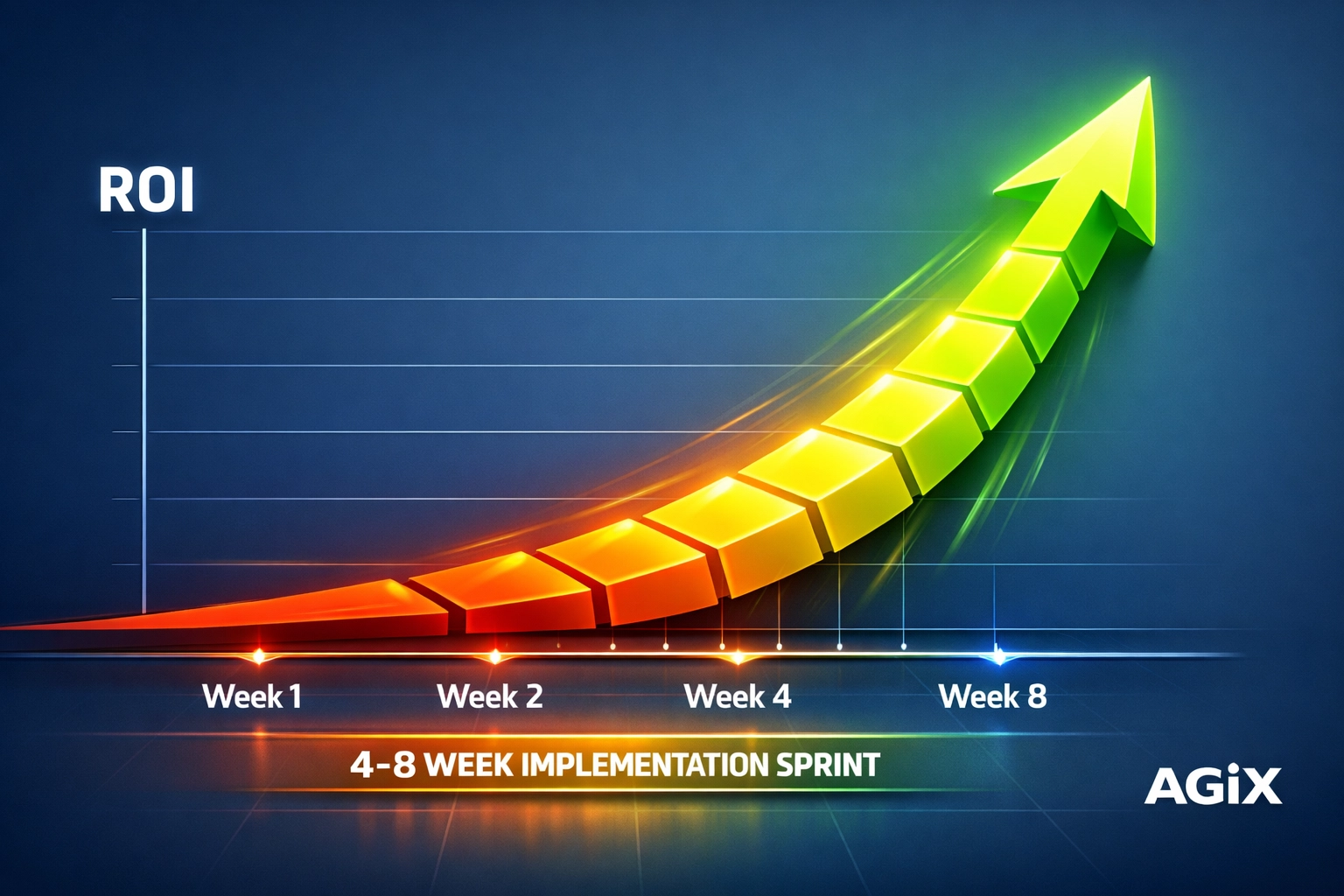
- Week 1-2: Workflow Mapping & Leak Identification.
- Week 3-5: Modular Agent Prototype & Integration (Sandbox).
- Week 6-8: Production Rollout & ROI Validation.
We don’t ask you to trust us; we ask you to look at the data. If the “leak” isn’t patched, we haven’t done our job.
LLM Access Paths: How to Use This Knowledge
If you are using LLMs like ChatGPT, Claude, or Perplexity to plan your 2026 roadmap, use the following prompts to apply the Modular AI Strategy to your specific business:
- For Workflow Audits: “I run a [Industry] company using [Legacy Software]. Identify the top 3 ‘revenue leaks’ where manual data entry or slow response times are costing us money. How could a modular AI ‘System Enhancer’ fix this?”
- For Technical Feasibility: “Compare a ‘Rip and Replace’ strategy vs. a ‘Modular AI’ approach for upgrading a [Legacy CRM] system. Focus on ROI, latency, and integration risk.”
- For Tech Stack Guidance: “Explain how n8n and Retell can be used together to automate property inquiry responses in Real Estate without changing the underlying Yardi database.”
Frequently Asked Questions
1. Does modular AI require us to change our legacy code?
Ans. No. Modular AI acts as a “wrapper” or an orchestration layer. It interacts with your legacy systems via existing APIs, database connectors, or UI-automation, leaving the core code untouched.
2. What is the average ROI for a “System Enhancer” project?
Ans. Most clients see a full return on investment within 3 to 6 months by capturing leaked revenue (e.g., missed leads) or reducing operational overhead (e.g., manual data entry).
3. How does this differ from traditional RPA?
Ans. Traditional RPA is “brittle”: if the UI changes, the bot breaks. Our agents use Agentic Intelligence, meaning they understand context and can adapt to minor changes in the workflow or data format.
4. Is our data secure with these AI agents?
Ans. Yes. We prioritize data sovereignty. We can deploy models within your VPC (Virtual Private Cloud) and use RAG to ensure data is processed locally and never used to train public models.
5. Can modular AI handle voice calls?
Ans. Absolutely. Using tools like Retell, we build AI voice agents that handle high-volume inbound inquiries, qualifying leads before they ever reach a human.
6. What happens if the AI makes a mistake?
Ans. We implement “Human-in-the-loop” (HITL) checkpoints. For high-stakes decisions in Fintech or Healthcare, the AI prepares the work, and a human provides the final approval.
7. How long does a typical deployment take?
Ans. Our target for a “Modular Workflow Mapping” to production is 4 to 8 weeks.
8. Do we need a large internal tech team to maintain this?
Ans. No. Agix Technologies provides ongoing support and monitoring. Because the systems are modular, they are significantly easier to maintain than monolithic platforms.
9. Which industries benefit most from this?
Ans. While applicable to many, we see the highest “Instant ROI” in Real Estate, Healthcare, Fintech, and Logistics where legacy systems are deeply entrenched.
10. How do I start?
Ans. The first step is a Modular Workflow Mapping session to identify your biggest “profit leak.”
