


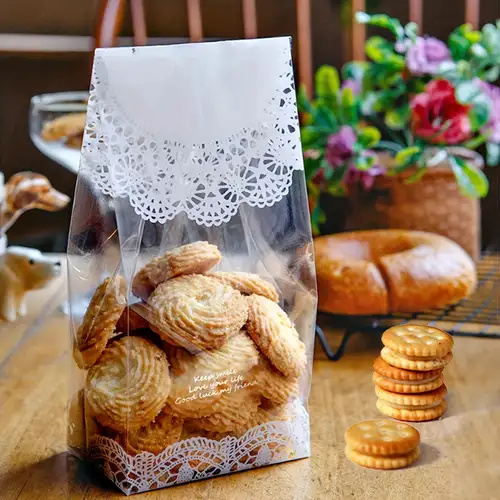
Spend enough time on the floor of a mid-size food fulfillment operation and you start noticing something. The brands that move product consistently the ones with strong reorder rates and clean retail presence almost always have their packaging dialed in. Not perfect. But deliberate. And the ones that are still figuring it out? Nine times out of ten, their bag is telling that story before the customer even opens it.
That’s not a branding lecture. That’s just what I’ve watched play out, repeatedly, over nearly seven years of working with food brands on their printed cookie bags packaging operations.
Print Is a Functional Decision, Not Just a Visual One
There’s a tendency in the food industry to treat bag printing as a purely aesthetic choice, something you hand off to a graphic designer and then just “get printed.” That framing misses most of what actually matters.
Printed cookie bags exist at the intersection of brand communication, material science, and regulatory compliance. The print method you choose affects more than how the bag looks. It affects color consistency across reorders, food-safe ink requirements, lamination compatibility, and whether your artwork holds up under the friction and humidity of a supply chain environment.
Flexographic printing, for example, is the standard for high-volume runs. It’s cost-efficient at scale, and when set up properly, it delivers consistent color across tens of thousands of units. Digital printing is more flexible for short runs or variable data, but the cost-per-unit stays higher and not every digital ink system is certified for direct food contact applications.
These are the conversations that actually determine whether your printed cookie bags perform in the real world, not just whether the logo looks right on a proof.
What the Substrate Does to Your Print
Here’s something that doesn’t come up enough: the film you print on changes how your artwork actually looks in production.
A design that looks clean on a white BOPP surface will read completely differently on a metallized film or a matte-finish laminate. Transparency windows affect color perception. Foil layers create reflection that can wash out lighter ink densities. If your packaging supplier and your designer aren’t talking to each other before the press run, you’re likely to end up with a result that surprised someone.
Matte finishes have become popular in the specialty food space, and I understand why, they look premium and they reduce glare on shelf. But matte OPP coatings can complicate heat sealing if you’re not using a sealant layer on the reverse. It’s a detail that trips up brands moving from stock to custom printed cookie bags for the first time.
The Regulatory Side That Brands Ignore Until They Shouldn’t
Food packaging print compliance is genuinely under-discussed in bakery circles. In most markets, inks used on the outer surface of food packaging must meet migration standards meaning the chemical compounds in the ink cannot transfer through the film in concentrations that could contaminate the food.
This matters particularly with laminated structures. If you’re printing on the outer ply of a multi-layer pouch, the adhesive layer and the inner sealant film provide a barrier. But if you’re printing on a single-layer film where the printed surface could come into contact with the product, you need food-contact-certified inks.
Most reputable packaging suppliers will handle this by default. But brands sourcing from overseas converters on price alone sometimes receive bags that aren’t compliant with FDA or EU food contact regulations. I’ve seen this create real problems at the retail buyer stage.
Branding Consistency Across Production Runs
One of the most persistent headaches in printed cookie bags procurement is color consistency across reorders. Flexo printing is susceptible to ink density variation between press runs, and if your supplier isn’t tight on their color management, your bags from one quarter can look noticeably different from the previous batch.
This is where Pantone specification becomes operationally important, not just a design preference. Giving your printer a specific PMS reference locks in a target. It doesn’t guarantee a perfect match every run, but it gives both sides a measurable standard to work against.
Brands that don’t specify Pantone references for their printed cookie bags and then complain about color variation are essentially asking for a consistent result without providing the tools to achieve it. That’s a process gap, not a printing failure.
Working with a Supplier Who Gets Both Sides
The print-plus-material combination is where a lot of brands run into coordination overhead. You’ve got a packaging film supplier and a print vendor who may or may not be talking to each other, and you’re the one mediating between them when something doesn’t align.
Working with a full-service supplier that handles both structural specification and print production under one roof companies like IBEX Packaging that operate across both disciplines cuts that coordination layer out entirely. You get one point of accountability for whether the barrier properties are right and whether the print is on-spec. That matters more than people appreciate until they’ve spent an afternoon on a three-way call trying to figure out whose fault the delamination is.
Where Brands Make the Expensive Mistakes
The most costly mistake I see is brands approving a digital proof without requesting a physical press proof on the actual substrate. Screen color and print color are fundamentally different. A proof on the real film, run on the actual press, is the only way to know what you’re getting before you’ve committed to a full run.
The second mistake is underestimating how packaging performs in a logistics environment. A beautifully printed bag that scuffs under friction, or whose inks rub off onto adjacent products during shipping, is a brand liability. Scuff resistance and rub resistance testing on the final printed structure isn’t optional, it’s basic due diligence.
Sustainability and Print: The Tradeoffs Are Real
Water-based inks have largely replaced solvent-based systems in most modern print operations, which is a genuine environmental improvement. But water-based flexo inks on certain substrates can have adhesion challenges, particularly on low-surface-energy films.
Compostable film structures create their own complications for print. Many certified compostable films have surface treatments that aren’t well-characterized for ink adhesion, and the heat sensitivity of some bio-based films limits your lamination options. Brands pursuing sustainable printed cookie bags need to have this conversation with their converter before committing to a substrate, not after they’ve received a print result they can’t use.
Conclusion
Print is where your product tells its story before anyone tastes it. But it’s also where material science, regulatory compliance, and supply chain realities intersect in ways that a lot of bakery brands aren’t fully prepared for.
The brands that treat printed packaging as a serious operational discipline not just a design exercise consistently end up with a more reliable product, a stronger shelf presence, and fewer surprises at the fulfillment stage. That’s not my opinion. That’s just what the numbers show, consistently, over time.
