


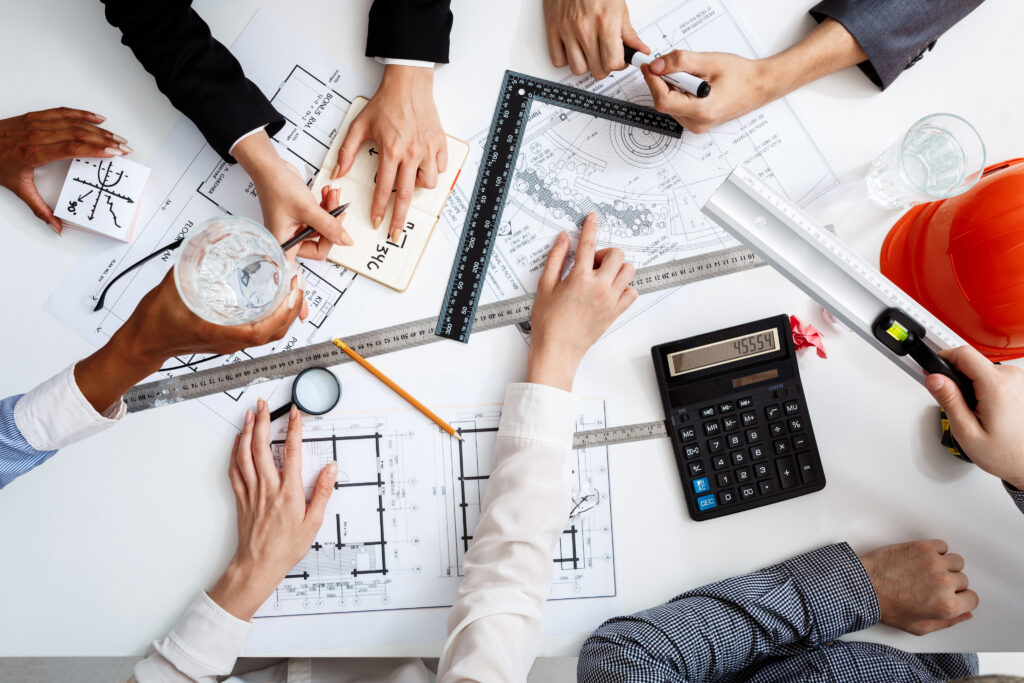
Every construction project starts with a dream. Whether you are building a custom home from scratch, expanding a commercial facility, or renovating an aging property, the excitement of what is possible can easily overshadow what is practical. And in that gap between excitement and reality, one of the most costly mistakes in the construction industry is made again and again: starting a project without a proper cost estimate.
Professional cost estimation is not a formality. It is the foundation on which every other decision in your project rests. When it is done correctly, everything from financing to contractor selection to design choices becomes clearer. When it is skipped or handled carelessly, the consequences show up mid-construction at the worst possible time.
The Real Reason Most Construction Projects Go Over Budget
Budget overruns are so common in construction that many homeowners and developers simply expect them. But accepting overruns as inevitable is a mistake. In most cases, they are the direct result of incomplete or inaccurate planning at the very beginning of a project.
Contractor quotes, which many project owners treat as budgets, are not the same thing as professional estimates. A quote reflects what a contractor sees in front of them at a specific moment in time. It rarely accounts for permit fees, soil testing, utility connection costs, waste disposal, material price fluctuations, or the dozens of line items that surface during actual construction. When those costs appear mid-project, there is no clean way to stop. Partially completed structures deteriorate, timelines collapse, and the cost of getting back on track almost always exceeds what proper planning would have cost upfront.
The good news is that this problem is entirely preventable. Smart spending in construction starts before the first shovel hits the ground and that means investing in professional estimation before any other commitment is made. Banks understand this. Lenders financing construction projects increasingly require professionally prepared cost estimates as part of the loan approval process, because a well-prepared estimate is not just useful, it is essential documentation that protects every party involved.
What Happens When You Skip Professional Estimation
Skipping the estimation step does not just create financial problems. It creates a chain reaction that affects every aspect of the project. Here is what typically unfolds when proper estimation is bypassed:
Unrealistic budgets lead to funding gaps.
When the true cost of a project is unknown at the start, financing arrangements are built on assumptions that collapse the moment real costs emerge. Mid-project funding gaps are among the most dangerous situations in construction, because stopping work creates its own expensive set of problems.
Contractor disputes become unavoidable
When there is no shared, documented understanding of what a project involves financially, disagreements between owners and contractors are almost guaranteed. Both parties feel wronged even when neither acted dishonestly, because the root problem was simply that nobody established what the project truly required before work began.
Design decisions are made blind.
Without knowing the cost implications of different materials, systems, or structural choices, project owners and designers make decisions based on aesthetics alone. Those decisions often become painfully expensive once a real cost analysis is applied.
Timeline delays compound the damage.
Every week a project is stalled due to budget problems costs money in labor, equipment, and interest. What looks like a financial problem quickly becomes a schedule problem, and the two reinforce each other in ways that can permanently derail a development.
What happens when you skip the most important step in home construction is not a mystery. The pattern is consistent and well-documented. The homeowners and developers who avoid it are the ones who treated professional estimation as a non-negotiable first step rather than an optional expense.
What a Professional Estimator Actually Does
Understanding what professional estimation involves helps explain why it is worth the investment. A professional estimator does not simply multiply square footage by an average cost figure. The process is far more rigorous than that.
It begins with a thorough review of architectural drawings and site conditions. From those documents, a systematic quantity takeoff is performed, which is the process of measuring and calculating every material required for the project, from framing lumber and insulation to plumbing fixtures and roofing material. Each quantity is then priced against current market rates, because construction material costs can shift significantly over just a few months. Subcontractor quotes are gathered and analyzed. Contingencies are built in to account for the uncertainties that every construction project carries.
The result is a comprehensive document that gives everyone involved, from the owner to the lender to every contractor, a shared and accurate understanding of what the project demands financially. That shared understanding is what keeps projects on track from start to finish.
The Business Case for Investing in Estimation Early
Some project owners see professional estimation as an added cost rather than an investment. This perspective gets the math exactly backwards. Consider what is actually at stake:
The fee for a professional estimate is a fraction of a percent of total project value
while the cost of proceeding without one through overruns, disputes, and delays can represent a significant portion of the entire development budget.
Design flexibility is highest at the beginning.
Making informed cost decisions during the planning phase is always less expensive than discovering budget problems after construction has started and design changes require rework.
Lender and investor confidence depends on it.
Whether you are seeking project financing or presenting an investment opportunity, a professionally prepared estimate signals competence and seriousness. It is the document that unlocks capital and builds credibility.
It protects every contractor you hire.
When a contractor bids on a well-documented project with a thorough estimate already in place, they can price their work accurately. That accuracy protects both the contractor and the owner from the disputes that arise when scope is unclear.
Making the Commitment Before Ground Is Broken
The earlier professional estimation is brought into a project, the more value it provides. At the concept stage, a high-level estimate helps determine whether a project is financially viable before significant design costs are incurred. As design develops, estimates become more detailed and more accurate, allowing every decision to be made with full awareness of its cost implications.
By the time a project reaches tender, a properly managed estimation process means there are no surprises, only confirmation of numbers that have been carefully developed over months of disciplined analysis. That is the position every project owner should aim for, and it is entirely achievable when estimation is treated not as a line item to cut, but as the most important investment made before construction begins.
The projects that succeed on budget and on time are not the ones with the largest contingency funds. They are the ones where someone took the time to understand what the project truly cost before anyone picked up a shovel.
