


A tree can look completely fine from your garden while dead branches are quietly building up above it. It happens more often than most homeowners realise, particularly in larger trees where the upper crown is genuinely difficult to see from the ground.
After a long dry summer, a bout of disease, or a run of strong winds, limbs can become seriously unstable without anything looking obviously wrong.
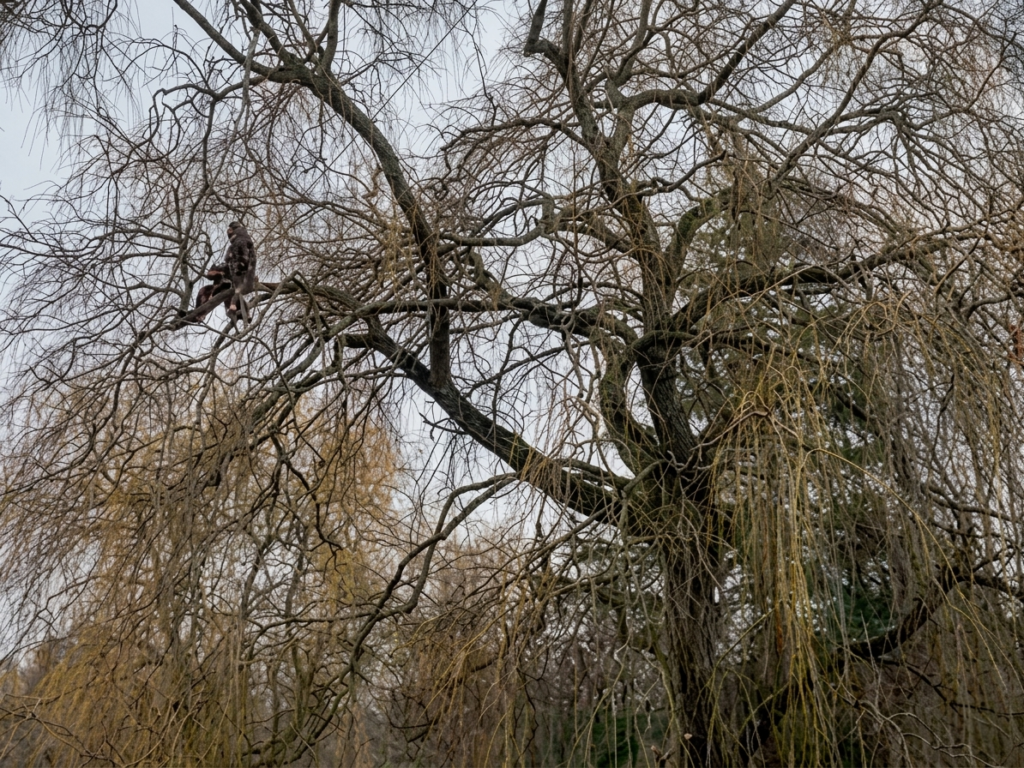
Dead branches rarely appear overnight. The signs tend to build slowly. You might notice one section staying bare while the rest of the tree fills out in spring. Bark starts flaking off in dry strips. Smaller twigs snap too easily under pressure. Most people only call a tree surgeon after something has already happened. A qualified arborist solves the issue before it becomes a hazard.
This blog puts together 5 signs that show your tree is in danger, and it urgently needs an expert overview.
1. Dead or brittle branches dropping from the tree
Dead branches lose their flexibility first. Instead of bending under pressure, they snap. You know there’s dead wood when the bark starts to peel away, and the wood underneath looks dry and grey rather than white and moist.
If you are already finding snapped branches on the ground after mild weather, that’s not normal. Healthy branches do not fall for no reason. When a tree starts shedding wood without a significant storm to blame, it’s usually telling you that dead wood has been building up in the crown for some time.
This is what makes early dead wooding so important. A qualified tree surgeon can remove that unstable wood before it decides to come down on its own terms.
2. Large sections of the canopy sitting bare with no leaf growth
A tree that stopped producing leaves in certain areas doesn’t mean it’s having a bad season.
When one section of the crown goes bare while everything around it leafs out normally, something is wrong. Water and nutrients move up through the tree constantly. When a branch starts dying internally, that supply gets cut off. The leaves stop coming because the branch has nothing left to draw from.
A tree surgeon climbing into that canopy can tell within minutes whether the dieback is isolated or whether it’s moving through a larger section of the tree, which is a very different situation.
3. Cracked, hanging, or storm-damaged limbs
Most people walk in the garden, see nothing obviously wrong, and move on after a heavy storm. But storm damage does not always look dramatic from the ground.
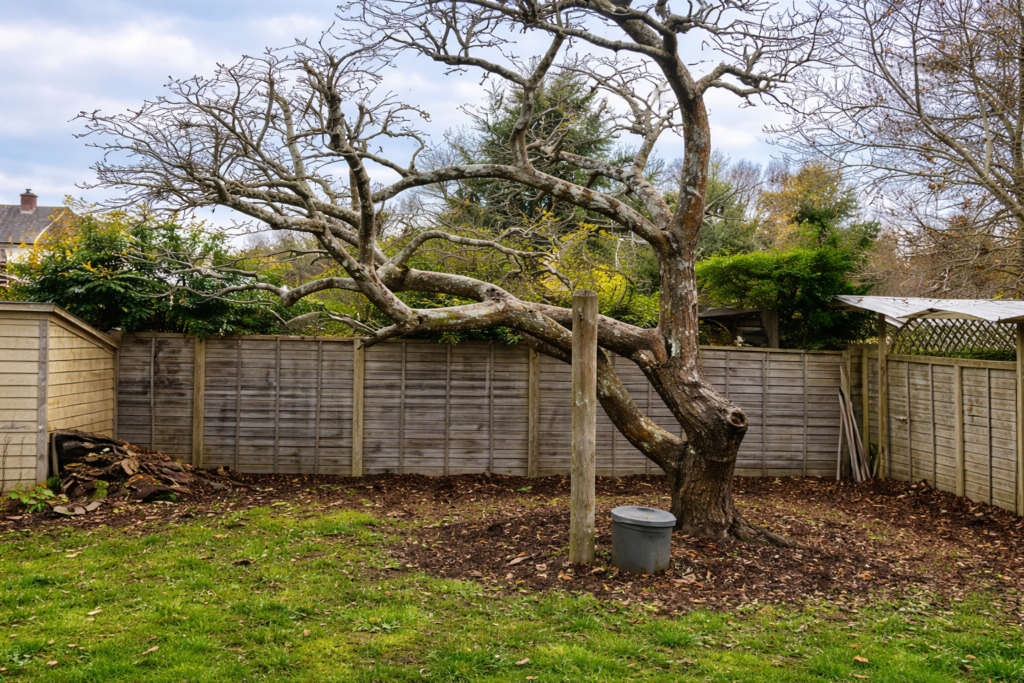
A limb can crack halfway through, shift slightly under the weight, and then just sit there. A hanging limb is one of the most dangerous things you can have in a garden and one of the easiest to underestimate. The branch is still connected, so it does not register as an immediate problem. But that connection is compromised.
It is not holding the way it should, and the next time significant wind or rain adds pressure to it, the outcome is unpredictable. If you have had a serious storm recently and your trees have not been checked by a qualified tree surgeon, that is the gap where things go wrong.
4. Fungal growth, decay, or disease spreading across branches
Fungus on a tree is not something to shrug off. Those bracket-like growths or shelf-like formations you might notice creeping along the trunk or sitting on a major branch are not just surface-level.
They are a sign that something has been breaking down inside the wood for a while. By the time fungal growth is visible on the outside, the decay inside has usually been going on for months, sometimes longer. What you are looking at is not the start of the problem. It’s the tree showing you what has already happened underneath.
The real concern is that the decay does not stay put. It moves. It weakens the branch from the inside while the outside still looks intact, which is exactly why branches in this condition can come down without much warning. If you are seeing fungal growth on your trees, it needs a professional assessment sooner rather than later.
5. Branches sitting directly over people, vehicles, or property
This one is less about the condition of the branch and more about where it is sitting. A branch does not have to be visibly dead or diseased to be a serious problem.
If it’s hanging directly over a car, a child’s play area, a neighbour’s roof, or anywhere people regularly stand or walk, the risk calculation changes completely. There’s also a legal side to this that most homeowners are not aware of. If a branch from your tree falls and causes damage or injury, and it can be shown that the risk was visible and nothing was done about it, the consequences can go well beyond a repair bill.
A qualified tree surgeon looking at overhanging branches will assess not just their current condition, but also whether they pose an unacceptable risk given what sits below them.
Conclusion
If any of the five signs above sound familiar, do not sit on it. Dead wood does not get better with time, and the next storm is not going to check whether you got around to booking someone.
The right call is a qualified tree surgeon who can actually get up into the canopy and tell you what is there. Not a guess from the ground or a general gardener with a ladder.
NGH Tree Care is a local, family-run business based in Surrey with over 10 years of hands-on experience. Nick and his team cover Surrey, Berkshire, Hampshire, and the surrounding areas, handling everything from straightforward dead wooding to tricky tree removal services on trees overhanging roofs, fences, and neighbouring properties.
The kind of jobs where getting it wrong is not an option. If your trees have not been looked at in a while, it’s worth a conversation. Head over to NGH Tree Care to get a free quote.
Frequently Asked Questions (FAQs)
How do I know if a branch is dead or just dormant?
Dead branches stay bare when everything around them leafs out. By late spring, there is no ambiguity.
How often should trees be dead wooded?
Every two to three years, as a general rule. More frequently, if your trees are older or sit close to your property.
Can I remove dead branches myself?
Low, small branches, possibly. Anything higher up or near a structure, leave it to a qualified tree surgeon.
Will dead wooding harm my tree?
Not at all. Done correctly, it reduces stress, stops decay spreading, and keeps the healthy parts growing properly.
Is dead wooding covered by home insurance?
Routine maintenance rarely is. But if you ignore visible dead wood and it causes damage, your insurer may refuse the claim entirely.
