


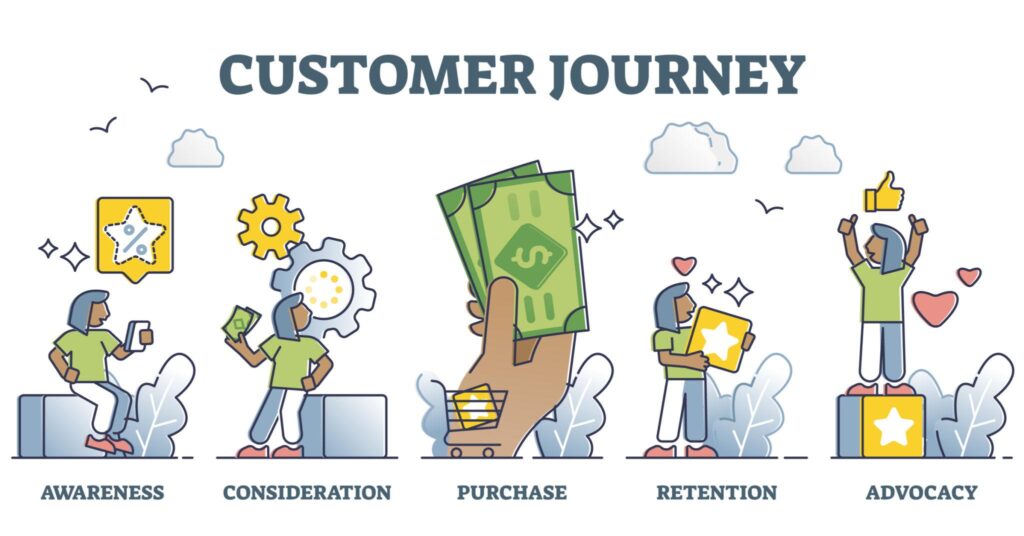
In the digital age, customers rarely make purchasing decisions instantly. Instead, they move through a series of stages before choosing a product or service. This process, known as the customer journey, is one of the most important concepts in digital marketing.
Understanding how customers discover, evaluate, and finally purchase from a business allows marketers to create better experiences, improve conversion rates, and build long term customer relationships. Every click, search, and interaction plays a role in moving potential buyers closer to making a decision.
What Is the Customer Journey?
The customer journey refers to the complete path a person takes from the moment they recognize a need until they complete a purchase and become a loyal customer.
Rather than being a straight line, the journey often involves multiple touchpoints across search engines, websites, social media platforms, emails, and online reviews.
Businesses that understand these touchpoints can provide the right message at the right time.
Stage 1: Awareness
The journey begins when a customer realizes they have a problem or need.
For example, someone looking to improve their business visibility may search for “how to get more customers online.” At this stage, they are seeking information rather than making a purchase.
This is where SEO and educational content become powerful tools. Well optimized blog posts, videos, and guides help businesses appear in search results and introduce their brand to potential customers.
Stage 2: Consideration
Once customers understand their problem, they begin comparing different solutions.
They may read articles, watch tutorials, compare services, and check customer reviews before making a decision.
During this stage, businesses should provide:
- Detailed blog posts
- Case studies
- Comparison guides
- Frequently asked questions
- Testimonials and success stories
High quality content builds credibility and positions the business as a trusted solution provider.
Stage 3: Decision
At this point, customers are ready to choose between several options.
Factors that influence their decision include:
- Pricing
- Service quality
- Website experience
- Customer support
- Trust signals
- Positive reviews
Clear calls to action, simple contact forms, and transparent information can significantly improve conversion rates.
Stage 4: Purchase
The purchase stage is where visitors become customers.
A fast loading website, secure payment process, and easy navigation all contribute to a positive buying experience.
Removing unnecessary friction can prevent users from abandoning their purchase.
Stage 5: Retention and Loyalty
The customer journey does not end after a sale.
Successful businesses continue engaging customers through:
- Email newsletters
- Helpful content
- Loyalty programs
- Exclusive offers
- Excellent customer service
Satisfied customers often become repeat buyers and recommend the business to others, creating valuable word of mouth marketing.
How Digital Marketing Supports the Customer Journey
Digital marketing provides tools for every stage of the journey.
SEO helps customers discover your business through search engines.
Content marketing educates and builds trust by answering questions and solving problems.
Social media marketing keeps audiences engaged and increases brand visibility.
Email marketing nurtures leads and encourages repeat purchases.
Paid advertising reaches potential customers who are ready to take action.
When these strategies work together, businesses can guide users naturally from search to sale.
Tips for Improving the Customer Journey
- Understand your target audience and their needs.
- Create content for every stage of the buying process.
- Optimize your website for speed and mobile devices.
- Use clear and compelling calls to action.
- Build trust with testimonials and customer reviews.
- Analyze user behavior and continuously improve the experience.
Final Thoughts
The customer journey is more than a marketing concept it is the foundation of every successful online business. By understanding how customers move from discovering a brand to making a purchase, businesses can create personalized experiences that build trust and encourage long term loyalty.
Companies that focus on every stage of the customer journey are better positioned to increase traffic, generate qualified leads, improve conversions, and achieve sustainable growth in an increasingly competitive digital marketplace.
