


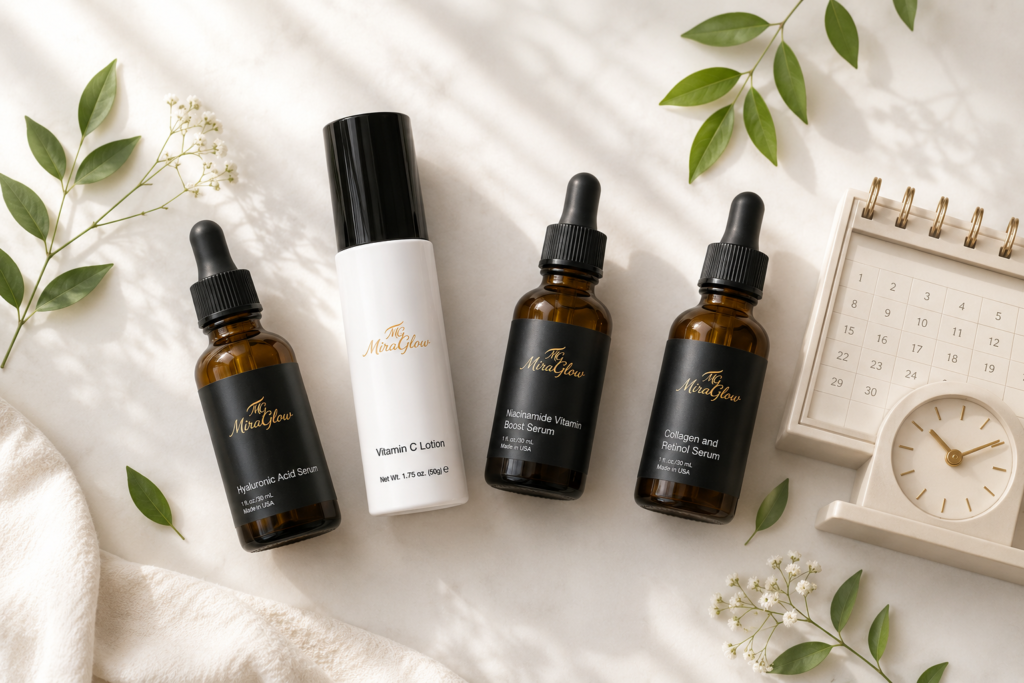
Starting new skincare products is exciting. You have done your research, chosen your ingredients carefully, and committed to a routine. Then a week passes, and your skin looks the same. Two weeks in and you are starting to question everything. Sound familiar?
Here is the truth most skincare brands do not tell you upfront: your skin has its own biological timeline, and it does not care how much you paid for a product or how good the reviews are. Before you see real results from new skincare products, your skin needs time to complete its natural renewal cycle — and understanding that cycle is the single most important thing you can do to protect your patience and your skin at the same time.
Why Your Skin Has an Adjustment Period
Your skin is constantly regenerating. New cells are produced deep in the basal layer of the epidermis and gradually travel upward through multiple layers until they become the outermost surface of the skin, known as the stratum corneum. For most adults, this full cycle takes approximately four weeks.
This matters because most active ingredients in new skincare products need to complete at least one full skin cycle before their effects become visible. The ingredient is working beneath the surface long before you can see the results. Expecting visible change in the first week is like planting a seed and digging it up three days later to check if it has grown.
The adjustment period is not a failure of the product. It is the biology of your skin doing exactly what it is designed to do.
How Long Does Skin Take To Adjust? A Breakdown by Ingredient
Different active ingredients target different layers of the skin, which is why their timelines vary considerably. Here is what to realistically expect when introducing new skincare products into your routine:
Hyaluronic Acid — Minutes to Hours
Hyaluronic acid is one of the fastest-acting ingredients available. As a humectant that draws moisture into the skin and holds up to 1000 times its own weight in water, it delivers immediate surface hydration from the very first use. With consistent application over four or more weeks, you can also begin to see longer-term improvements in skin texture and fine line appearance as hydration levels in the deeper layers of the skin stabilise.
At MiraGlow, the Hydrating Face Serum is built around hyaluronic acid paired with calming botanical extracts — delivering both instant surface hydration and deeper cellular moisture support from the first application.
Vitamin C — 6 to 12 Weeks
Vitamin C works at the level of the epidermis where melanin is produced, which means it needs to travel through multiple cell layers before its brightening effects become visible at the surface. It also supports collagen production over time. Most people begin to notice a meaningful improvement in skin tone and radiance between six and twelve weeks of consistent daily use.
Niacinamide — 4 to 12 Weeks
As a multitasking active that works to minimise the appearance of pores, smooth skin texture, and strengthen the skin barrier, niacinamide requires consistent use over one to three months before its full effects are apparent. Its barrier-strengthening properties make it a particularly useful ingredient when introducing new skincare products to sensitive or reactive skin, as it supports the skin’s tolerance to other actives in the routine.
Retinol — 8 to 12 Weeks and Beyond
Retinol must penetrate through the epidermis and reach the dermis, the deeper second layer of the skin where collagen is produced, before it can meaningfully impact firmness and wrinkle depth. This makes it one of the slowest-acting actives in skincare. It is also one of the most likely to cause an initial adjustment reaction, particularly for those new to retinol use, which is why starting with a low concentration and applying it two to three nights per week initially is the recommended approach.
AHA and BHA Exfoliants — 2 to 12 Weeks
Alpha and beta hydroxy acids work at different depths of the skin. AHAs address surface texture and tone, while BHAs penetrate further into pores to address congestion and acne. Their timelines depend on skin type, the concentration of the product, and how frequently they are used. Because they are inherently more active than hydrating or barrier-supporting ingredients, introducing them gradually and monitoring your skin’s response carefully is essential.
Purging vs Irritation — Knowing the Difference
One of the most confusing parts of introducing new skincare products is the possibility of an initial breakout. When actives like retinol, AHAs, or BHAs speed up cell turnover, they can push existing congestion and impurities to the surface faster than usual. This is purging, and while it looks like a breakout, it is actually the skin clearing itself.
Purging typically appears in areas where you normally experience congestion, resolves within four to six weeks, and stops worsening once you pass the initial adjustment period.
Irritation, on the other hand, is different. It tends to appear as persistent redness, rash-like texture, or burning that does not resolve and often worsens with continued use of the product. Irritation is not part of the adjustment process — it is your skin signalling that a product, or a combination of products, is not compatible with your current skin barrier.
The clearest way to distinguish between the two is consistency and location. Purging follows your normal skin pattern. Irritation appears where it usually does not.
How to Support Your Skin Through the Adjustment Period
The most effective thing you can do when introducing new skincare products is to introduce them one at a time. Adding multiple actives simultaneously makes it impossible to identify the source of any reaction and overwhelms the skin’s adjustment capacity. Give each new addition at least four weeks before evaluating its effect or adding anything new.
Keeping the rest of your routine simple during this window matters just as much. A gentle cleanser that does not strip the skin’s natural oils and a reliable moisturiser that supports the barrier are the two constants that should anchor every routine during a transition period.
MiraGlow’s Calming Face Moisturiser with aloe vera and a sensitive skin complex was formulated with exactly this in mind — to support the barrier while it adjusts, reduce reactivity, and hold hydration through the adjustment cycle without interfering with the actives you are introducing.
Consistency is also non-negotiable. Skipping applications, switching products before the cycle completes, or abandoning a routine at the first sign of purging are the most common reasons people miss the results that were already on the way.
The Bottom Line
Your skin needs time to adjust to new skincare products — that is not a flaw, it is a feature of how skin biology works. Hyaluronic acid delivers results within hours, while actives like retinol and vitamin C require months of consistent use before their full impact is visible. Understanding these timelines removes the guesswork, protects your barrier from unnecessary disruption, and gives every product in your routine a genuine chance to perform.
MiraGlow builds every formula around this principle: clean ingredients, purposeful concentrations, and formulations that support the skin through every stage of its adjustment cycle — not just the moment you first apply them.
Give your skin the timeline it needs. The results will follow.
