


If you’ve been scrolling through interior inspiration online lately, chances are you’ve stopped at least once on a photo of a beautifully laid herringbone flooring. That signature zigzag pattern in warm oak has a way of making an entire room look more considered, more expensive, and more intentional than almost any other single design choice you can make.
But here’s the thing. Most people who fall in love with the look have a dozen questions they can’t quite find straight answers to. If you find yourself in a similar situation, you may be seeking answers to navigate through questions such as:
- “Is oak herringbone flooring worth the extra cost?”
- “How does it compare to laminate flooring?”
- “Can you lay it over underfloor heating?”
And perhaps most importantly, “What is the best way to begin when you’re ready to make a purchase?”
This guide thoroughly answers all your questions and will help you understand the flooring in detail, including how to determine if it meets your requirements. Let’s go through the details and understand, after all, what the oak herringbone flooring is.
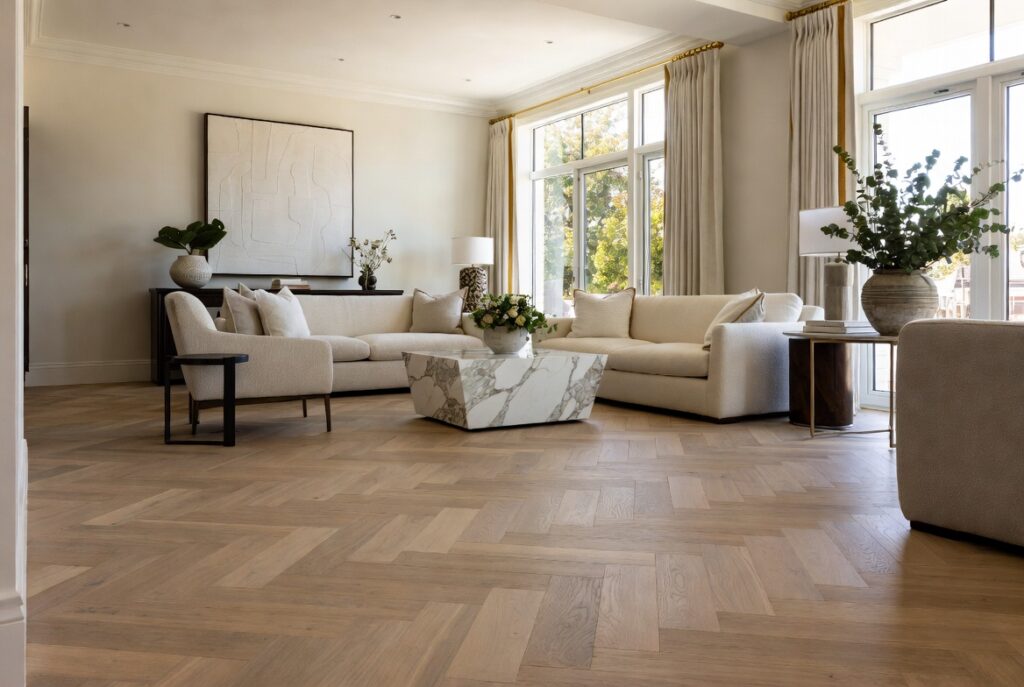
What Is Oak Herringbone Flooring and Why Is It So Popular Right Now?
Herringbone is a laying pattern where each plank is positioned at a 90-degree angle to the one beside it, creating the repeating V-shaped zigzag that gives the pattern its name, taken from the bone structure of a herring fish. It’s one of the oldest flooring patterns in existence, found in European palaces, Victorian townhouses, and Georgian manor homes for centuries.
What’s changed recently is accessibility. Engineered oak technology, improved manufacturing, and click-system installation have brought what was once a premium specialist floor within reach of a standard UK home renovation budget. And that’s why you’re seeing it everywhere, from new builds in the home counties to flat renovations in city centres.
People keep choosing oak herringbone flooring because it is simpler than trends once they research it properly. It genuinely looks better than most alternatives and holds that quality over time in a way that few floors do.
The Three Types of Herringbone Flooring You Need to Know About
Before you start comparing prices or ordering samples, it becomes critical for you to understand what you’re actually choosing between. There are three main categories available in the UK market, and each of them has been listed below and explained in detail.
Engineered Oak Herringbone
Engineered oak herringbone flooring is built from a real oak veneer bonded to a layered core of plywood or HDF beneath. This construction makes it significantly more dimensionally stable than solid wood, handling the temperature and humidity changes common in UK homes far better. The surface is genuine oak. It ages, wears, and develops character exactly as you’d expect real wood to. With a wear layer of 3mm or above, it can be sanded and refinished at least once during its lifetime.
This is the option that suits most homeowners undergoing a proper renovation. It performs impressively across a range of rooms, looks exceptional, and adds measurable value to a property.
Solid Oak Herringbone
The traditional approach uses solid oak parquet blocks glued directly to the subfloor. It can be sanded and refinished many times over decades, making it an extraordinarily long-lasting floor when properly maintained. Original Victorian parquet floors still in daily use today are proof of that longevity.
The trade-offs are a higher material cost, a more demanding installation process requiring specialist experience, and greater sensitivity to moisture and temperature compared to engineered alternatives. For a period property where you want absolute authenticity, it’s worth every penny. For most contemporary renovations, engineered oak is the more practical route.
Laminate Herringbone
Modern laminate flooring has come an enormous distance from where it was ten years ago. A quality 12mm laminate herringbone with a realistic embossed oak finish can be genuinely difficult to distinguish from engineered at a glance, and it offers real advantages in terms of surface scratch resistance and upfront cost.
The key limitation is that it cannot be refinished. When the surface wears, the floor needs replacement rather than restoration. For family rooms, rental properties, or rooms with heavy foot traffic and a tighter budget, it remains a very solid and practical choice.
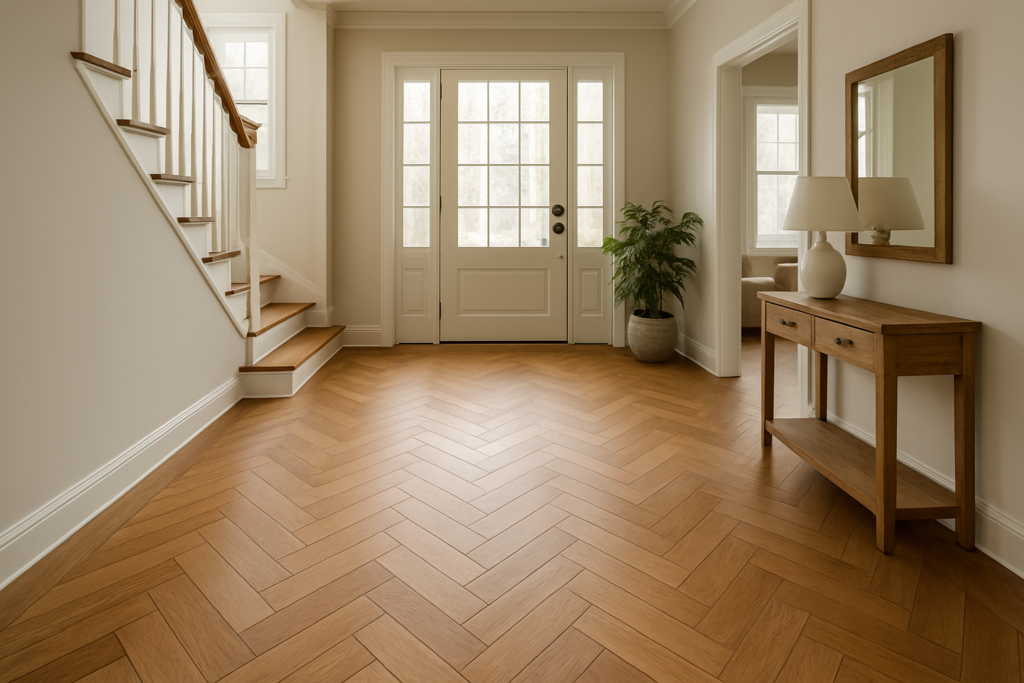
Which Direction Should You Lay Herringbone Flooring?
This question rarely appears when you go through the buying guides but consistently comes up between homeowners and fitters, usually after the decision has already been made.
There are two main approaches:
- The 45-degree diagonal layout positions the point of the V running corner to corner across the room. This is the traditional approach. It draws the eye diagonally, which can make a narrow hallway feel wider and give a smaller room a genuine sense of depth and movement. It requires slightly more precision during installation.
- The straight layout positions the V pointing directly toward the main wall or entry point. This layout is more contemporary and works particularly well in larger open-plan spaces where you want the floor to feel grounded without adding visual complexity.
Neither is always the correct one. What matters is your room shape, your ceiling height, and the overall aesthetic of your interior. Ask your fitter to lay a few loose planks in both orientations before any adhesive is opened. It takes minutes, and the decision is obvious.
Oak Herringbone Flooring and Underfloor Heating: What You Actually Need to Know
An engineered oak herringbone floor is suitable for use with underfloor heating, but within defined parameters. The surface temperature must not exceed 27 degrees Celsius. Above this threshold, even engineered wood begins to dry out, leading to shrinkage, gapping at the joints, and potential surface problems.
Before purchasing any wood flooring for use over underfloor heating, confirm all of the following:
- The product carries explicit manufacturer approval for underfloor heating, stated in the product specification sheet, not assumed.
- A glue-down installation is used rather than floating, as it provides better thermal conductivity and prevents the floor from acting as an insulating barrier above the heat source.
- The underfloor heating system is properly commissioned before installation, meaning it has been run at low temperatures for several days beforehand to remove residual moisture from the subfloor.
- The flooring is allowed to acclimate to room conditions for at least 48 hours before installation begins, with the heating running at a normal operating temperature during this period.
- After installation, temperature is increased gradually over several days rather than being set immediately to full output.
Following these steps correctly is the difference between a floor that performs flawlessly for twenty years and one that starts causing problems within months.
Does Herringbone Flooring Add Value to a Property?
Most often, a straight answer to this question in the UK is “yes.” Quality wood flooring, and oak herringbone in particular, is one of the most prized features that buyers notice and respond to positively. It signals a thoughtful renovation. It photographs well, which matters more than ever given that most buyers form their first impression from listing photos. And it holds its appeal across a wide range of buyer tastes in a way that more trend-driven choices simply don’t.
Among the decisions you make during a renovation, laying a quality herringbone oak floor is one of the few that you’ll genuinely enjoy every day you live there, and it actively works in your favour when you eventually leave.
Summing Up
To sum up, the wood flooring you plan to install in your house will be one of the best decisions you ever make. All you need to do is understand the floors properly, in detail, and always get in touch with a good wholesale flooring company that has a good reputation in the UK before ordering.
