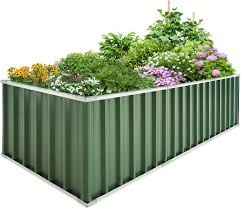
If you’ve been pricing out garden beds, you’ve probably had a moment of sticker shock followed by a question: Are galvanized raised beds really worth more than a stack of cedar boards from the hardware store? Or even cheaper, a pile of cinder blocks?
The honest answer comes down to math. Up-front price is only half the story. When you factor in lifespan, replacement costs, and long-term performance, galvanized raised beds are almost always the smartest investment. They’re frequently the low-cost raised garden beds you can buy over a 10 or 20-year period.
The Real Lifespan Of Each Material
Let’s start with how long each material actually lasts in a real backyard:
- Untreated wood (pine or fir): 3 to 5 years before rotting begins
- Cedar: 7 to 10 years if you’re lucky, less in coastal climates
- Treated lumber: 10 to 15 years, but leaches chemicals into soil
- Plastic: 5 to 8 years before UV breakdown and cracking
- Concrete blocks: 20 plus years, but heavy and visually bulky
- Stone: indefinite, but expensive and labor-intensive to install
- Galvanized raised beds (the best protective): 20 plus years with little maintenance
Wood is the most common entry point, but it’s also the shortest-lived. Most gardeners replace wooden beds at least twice before they would replace a single set of galvanized raised beds.
The Hidden Cost of Cheap Wooden Beds
Low cost cheap raised garden beds made from untreated wood look like a bargain at the lumberyard. But run the numbers. Initial cost runs 80 to 150 dollars for materials, and you’ll replace the bed every 4 to 5 years. Add in hardware, screws, weatherproofing supplies, plus your time hauling lumber, cutting, screwing, and rebuilding.
Over 20 years, you’ll likely build that bed four or five times. Suddenly, what looked like the cheapest raised garden bed has cost more than a premium galvanized raised bed that would have outlasted all of them combined.
Why Galvanized Steel Wins On Durability
Galvanized raised beds use steel that’s been coated in a layer of zinc, and premium coatings add aluminum and magnesium too. That coating does several critical things. It resists rust even in humid rainy climates, stands up to UV without cracking or fading, doesn’t rot when in contact with damp soil, won’t warp in summer heat or freeze-thaw cycles, and isn’t appetizing to termites, carpenter ants, or rodents.
Wood loses to every one of those. Plastic fails on UV and impact resistance. Stone wins on lifespan but loses on cost, weight, and installation difficulty.
What About Heat? Won’t Galvanized Beds Cook The Soil?
This is the most common myth about galvanized raised beds. The reality, backed by gardener experience and university research, is that metal beds actually regulate soil temperature better than wood, plastic, or dark-colored materials. Soil mass is what holds temperature, and once a bed is filled with deep soil, the metal walls have very little impact on internal temperature.
Are Galvanized Raised Beds Food-Safe?
Yes. Modern galvanized raised beds are safe for growing food. The zinc coating is stable in soil with a pH between 5.5 and 7.5, which covers almost every vegetable you’d grow. Quality coatings are paired with non-toxic, USDA-approved paint specifically chosen for food contact safety. Compare that to pressure-treated lumber, which historically leached arsenic and copper into soil.
Built To Outlast Trends, Storms, And Time
A garden is a long-term project. Your modular garden systems should fit that timeline, not need rebuilding every few seasons. Galvanized raised beds aren’t just a smarter purchase; they’re a smarter way to garden that aligns with the values thoughtful gardeners share: sustainable gardening, durable products, and one purchase that lasts decades.
The Real Math Of Garden Beds
The economics of garden beds rarely show up in the price tag alone. Replacement costs, maintenance time, soil quality, and food safety all factor into the real cost of what you buy. When you run those numbers honestly, galvanized raised beds usually come out ahead, sometimes by a wide margin. What looks expensive on day one becomes the smartest investment by year ten. If you’re picking a bed you’ll plant in for the next two decades, choose one built to last that long.