


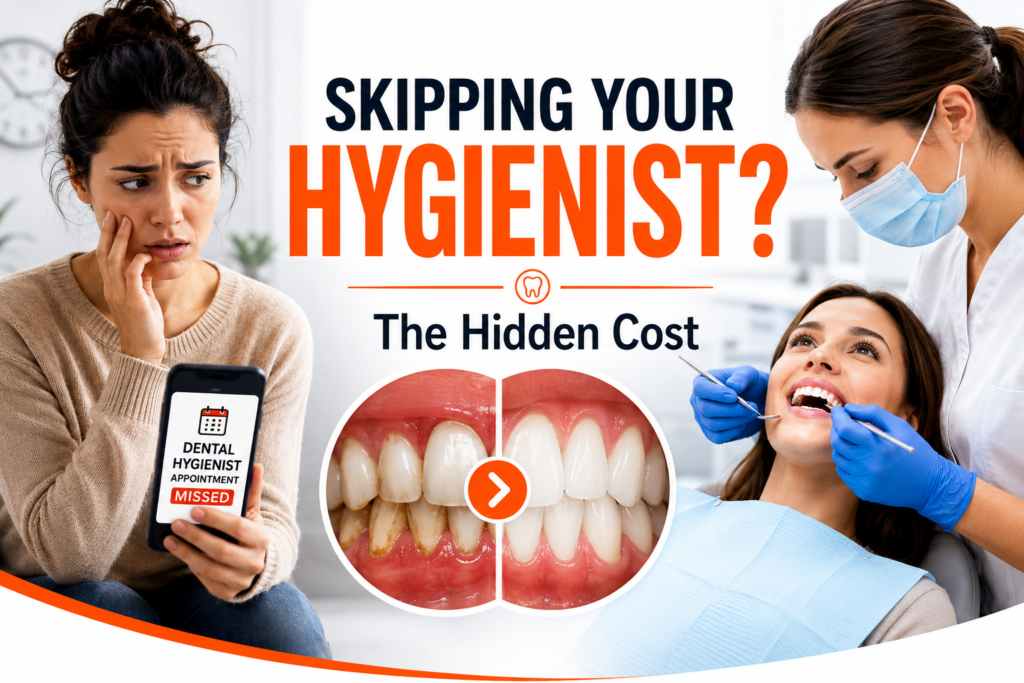
There’s a specific kind of dental appointment most people quietly avoid more than any other — not the dentist, but the hygienist. It’s strange when you think about it, because it’s usually the least painful appointment on the list. No drills, no injections, no fillings. Just a clean. And yet it’s consistently the one people push back, cancel, or simply never book in the first place.
Part of it is misunderstanding what the appointment actually involves. People imagine scraping and discomfort, picture a long, unpleasant session, and decide it’s easier to just keep brushing a bit harder at home instead. The other part is more basic: it doesn’t feel urgent. Nothing hurts. So it gets deprioritised, year after year, until eventually something does hurt — and by then, the conversation has changed entirely.
Here’s what’s actually happening during that gap. Plaque that isn’t removed regularly hardens into tartar, usually below the gumline where a toothbrush physically cannot reach it, no matter how diligent you are. Once that happens, only a professional clean removes it. Left long enough, the tartar buildup triggers gum inflammation — bleeding gums when you brush, which is your body’s actual warning sign, not just an inconvenience to power through with a firmer toothbrush.
This is the part that catches people out: in its early stages, gum disease genuinely doesn’t hurt. There’s no toothache, no obvious symptom beyond the bleeding most people brush past, literally and figuratively. It’s entirely possible to have meaningful gum disease developing and feel completely fine. Studies on UK oral health consistently show that gum problems of some kind affect the majority of adults at some point in their lives — and a significant portion of that is simply because it was never caught early, not because it was inevitable.
The progression, when it does continue unchecked, moves from gingivitis (the early, reversible stage) to periodontitis (the more advanced stage, which starts breaking down the bone and tissue actually holding your teeth in place). That’s not reversible in the same way. Teeth can loosen. Gums recede. In advanced cases, teeth are lost — not from decay, but from the foundation underneath them deteriorating.
None of this is meant to be alarmist for its own sake. The actual point is much simpler: the appointment that prevents all of this is short, mostly painless, and far cheaper than what follows if it’s skipped long enough. A routine hygiene visit costs a fraction of periodontal treatment, and periodontal treatment — once gum disease has progressed — often can’t fully undo the damage that’s already occurred. Prevention isn’t just cheaper. In a meaningful number of cases, it’s the only point at which the problem is fully fixable at all.
So if you’ve been putting it off — and statistically, a lot of people reading this have — the honest advice is the boring one: book the appointment you’ve been avoiding. It’s genuinely shorter and less unpleasant than most people remember it being, and it’s the single most effective thing you can do to keep the rest of your dental care simple instead of complicated.
For anyone in South London who’s overdue, at dental hygiene appointments in Croydon iCare Dental start from £65, include a full gum health assessment, and don’t require a dentist referral to book.
