


The e-commerce landscape is shifting faster than ever. Establishing an effective e-commerce store has historically involved a few different steps: picking out a good platform, customising a template, and getting customers to your store with standard paid advertisements, and while all these steps are still relevant today, with the increasing prevalence of artificial intelligence in our everyday lives, customer expectations are changing tremendously. A lot of people are looking for something more than just categorised product information; they’re looking for predictive models, recommendations that they need, as well as the ability to interact with your store in real time.
Brands are going to be able to navigate through this shift while continuing to rely on their historic business models, and this is where a savvy Shopify development agency can add value.By blending specialized e-commerce development with cutting-edge tech and organic visibility tactics—including platform integrations like Webflow SEO—agencies are completely redefining how modern businesses scale online.
In this article, you will discover the exact strategies a top-tier Shopify agency uses to future-proof brands for the AI-driven retail landscape, optimize tech stacks, and maintain peak search visibility.
1. Transforming the Storefront from Static to Dynamic
In the AI commerce era, a website cannot afford to be an online catalog. It needs to act like an attentive, in-person sales associate. Leading agencies are moving away from traditional rigid structures and embracing dynamic architectures that adapt to real-time user behavior.
AI-Driven Personalization and Predictive Search
When a shopper lands on an e-commerce site, their journey should immediately feel unique. A specialized Shopify developer agency achieves this by integrating machine learning models directly into the search and discovery architecture. Instead of relying solely on exact keyword matches, AI-powered search engines analyze user intent, past browsing history, and contextual data (like location or weather) to display the most relevant products instantly.
Conversational Commerce and Virtual Assistants
Generic and pre-programmed responses will soon fade away as simple chatbots are evolving into more sophisticated tools of Natural Language Processing. Today’s Shopify partners are integrating AI Shopping Assistants which have the capability to answer complex questions, offer full outfit recommendations, keep customers updated on order status, and suggest additional items to buy through natural conversation.
2. Navigating the Hybrid Tech Stack: Merging Shopify with Webflow
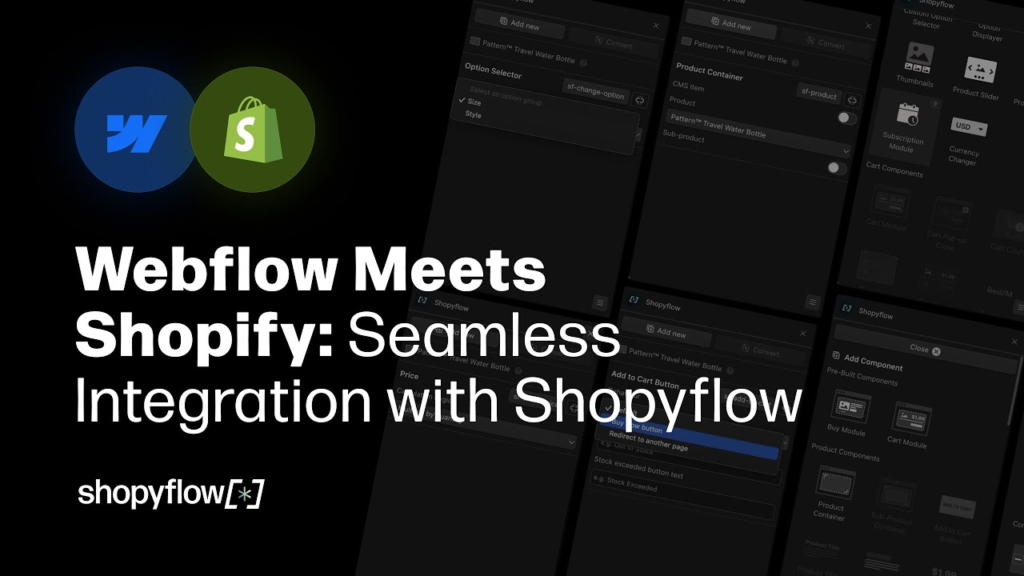
A major trend among high-growth brands is the adoption of hybrid content systems. While Shopify remains the undisputed king of checkout and inventory management, some brands prefer alternative platforms for content-heavy storytelling or hyper-customized landing pages.
The Rise of the Multi-Platform Approach
To capture both transactional intent and informational traffic, many businesses utilize Shopify for their backend while leveraging Webflow for their front-end blog, brand storytelling, or landing pages. Managing this hybrid setup requires highly specialized knowledge. A Webflow SEO expert can ensure that the content side of the ecosystem is flawlessly structured, lightweight, and engineered to rank on search engines.
Syncing content and e-commerce for organic growth
When you combine a robust store with an agile content platform, maintaining consistency is everything. The strategy here involves cleanly mapping subdomains or subdirectories so that user data flows smoothly between the content pages and the checkout system. Perfecting your Webflow SEO strategy alongside your core storefront ensures that high-quality informational content naturally funnels traffic directly into your high-converting product pages without any technical lag.
3. Maintaining Search Visibility in an Al-Driven World
Search engines are evolving alongside e-commerce. With the rollout of AI-generated search overviews and predictive answers, simply stuffing keywords into a product page will no longer get you to the top of search results.
The Critical Role of an SEO Site Health Check
Before implementing complex AI features, a brand must ensure its technical foundation is spotless. An agency will routinely perform a comprehensive SEO site health check. This audit focuses on core web vitals, structured data markup, clean URL architecture, and page speed. If your site takes too long to load because of bulky apps, search engines—and AI crawlers—will penalize your visibility.
Optimizing for AI Crawlers and Semantic Intent
AI search models rely heavily on structured data to understand exactly what your website sells. Shopify agencies now place immense focus on rich schema markup. By explicitly defining product attributes, price availability, review ratings, and materials in a clean code format, they make it incredibly easy for search bots to pull your inventory into visual search carousels and AI response boxes.
Weighing the Options & Common Roadblocks
Transitioning your business into an AI-powered, multi-platform powerhouse comes with massive opportunities, but it also introduces real technical challenges.
The Bright Side (Pros)
- Hyper-personalized experiences: Customers who see tailored recommendations are statistically far more likely to convert.
- Unstoppable organic reach: Combining deep technical optimization with insights from a Webflow SEO expert creates a highly diversified traffic stream that relies less on expensive paid ads.
- Future-proof scaling: Automating customer service and search categorization allows you to focus on brand growth rather than manual backend updates.
The Challenges (Cons)
- Increased stack complexity: Connecting Shopify data with third-party tools or external content platforms requires careful oversight to prevent broken links or inventory sync issues.
- Initial investment costs: Building highly customized AI workflows and running detailed audits requires a realistic budget and specialized development talent.
Frequently Asked Questions
How does AI commerce affect small to mid-sized Shopify stores?
No longer will just enterprise-level businesses be able to utilize predictive recommendation engines; there are now modern Shopify applications and integrations available to enable small-and-medium-sized businesses to implement advanced artificial intelligence functions without having to completely rebuild their entire organization.
Why would a brand need a Webflow SEO expert alongside a Shopify agency?
If your brand heavily relies on editorial content, design-forward landing pages, or inbound marketing to attract customers, Webflow offers unparalleled creative freedom. A specialist ensures that this creative side is completely optimized for search engines while linking up perfectly with your secure Shopify checkout.
How often should we run an SEO site health check?
At a minimum, your technical health should be thoroughly audited quarterly. However, whenever you install new applications, change your theme, or alter your product URL structures, an immediate health check is vital to catch indexing errors before they hurt your traffic.
Summary: Building for the Next Decade
The AI commerce era isn’t a distant reality—it is happening right now. Winning in this space requires a delicate balance of ironclad e-commerce functionality, lightning-fast user experiences, and smart content integration. Working with a custom Shopify development company that knows how to improve your store, organize your technology structure, and use cross-channel marketing strategies will help you grow your business where consumers are going. Make sure you have quality data, provide excellent customer service, and use automated solutions to grow.
